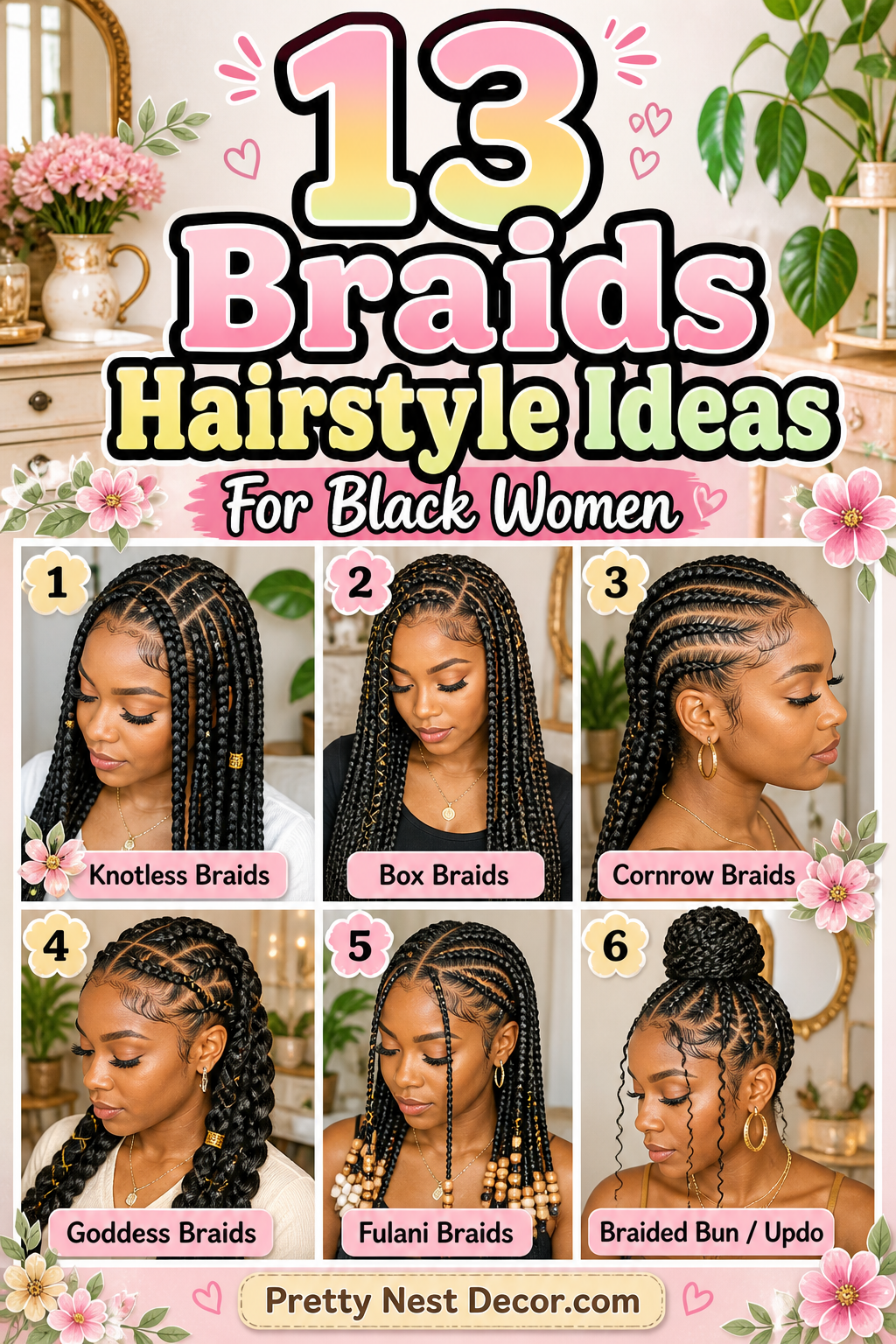
13 Braids Hairstyle Ideas For Black Women
Braided hairstyles have always been more than just a beauty trend for Black women—they are a powerful expression of culture, identity, creativity, and practicality. From traditional African braiding techniques passed down through generations to modern, Pinterest-worthy styles seen today, braids continue to evolve while holding deep cultural significance. But beyond their history and beauty, braids also solve one of the most common challenges many women face: finding a hairstyle that is both stylish and manageable.
If you’ve ever struggled with daily hair maintenance, breakage, or simply not having enough time to style your hair every morning, braided hairstyles can completely change your routine. They are protective, versatile, and long-lasting, making them one of the most practical choices for busy lifestyles. This works best when you want a hairstyle that looks polished without requiring constant effort.
One of the biggest problems many Black women face is balancing hair health with styling. Frequent heat styling, chemical treatments, or tight hairstyles can lead to damage over time. Braids offer a solution by protecting your natural hair, reducing manipulation, and allowing it to grow without constant stress. At the same time, they give you the freedom to experiment with different looks—from simple and elegant to bold and statement-making.
If you have a small room… think about how important it is to use space wisely. You want something that looks good but also serves a purpose. Braids work in a similar way—they are not just about appearance; they are functional, efficient, and designed to make your life easier. The right braided style can last for weeks, save you time, and still make you feel confident every single day.
Another challenge is versatility. Many hairstyles look great for one occasion but don’t transition well into others. Braids, however, are incredibly flexible. You can wear them to work, style them for special events, or keep them simple for everyday life. This works best when you choose a style that matches both your lifestyle and your personal aesthetic. Whether you prefer something minimal or eye-catching, there’s a braided hairstyle that fits.
But here’s where most people get it wrong—they focus only on how a style looks without understanding how it works. Not all braids are created equal. The size, length, tension, and pattern all play a huge role in how comfortable the style is, how long it lasts, and how it affects your natural hair. Choosing the wrong type of braid can lead to scalp tension, breakage, or unnecessary discomfort. That’s why it’s important to go beyond inspiration photos and understand the details behind each style.
In this article, you’re not just going to see a list of braided hairstyle ideas—you’re going to learn exactly how each one works, who it’s best for, and how to make it suit your needs. This is especially important if you’re investing time and money into getting your hair braided. You want a style that not only looks good on day one but still feels comfortable and looks fresh weeks later.
We’ll explore a variety of braid styles that are trending right now, including both classic and modern options. But more importantly, each idea will be broken down in a way that actually helps you make a decision. You’ll understand the purpose behind each style, how to maintain it, and what to avoid so you don’t run into common issues.
You’ll also get practical advice that goes beyond surface-level tips. For example, how to choose the right braid size based on your hair type, how to reduce tension on your scalp, and how to maintain your braids so they last longer without damaging your natural hair. These are the details that most blogs skip—but they make a real difference in your experience.
This works best when you approach braids not just as a style, but as a strategy. The goal is to find a look that complements your lifestyle, protects your hair, and makes you feel confident. Whether you prefer bold, waist-length braids or short, lightweight styles, the key is understanding what works for you.
Another important factor is time. Some braided styles take several hours to install, while others are quicker and more convenient. Not everyone has the same schedule or patience, and that’s okay. You’ll learn which styles are worth the time investment and which ones are better for a faster, low-maintenance option.
By the end of this guide, you’ll have a clear understanding of different braid styles and how to choose the right one for your needs. Instead of guessing or following trends blindly, you’ll be able to make informed decisions that actually benefit your hair and your daily routine.
So if you’ve been thinking about getting braids but feel overwhelmed by the options—or if you’ve tried braids before but didn’t get the results you wanted—this guide is designed to help you do it the right way. Because the right braided hairstyle isn’t just about looking good… it’s about feeling comfortable, confident, and in control of your hair every single day.
1. Box Braids (Classic & Timeless)
Explanation (What it is)
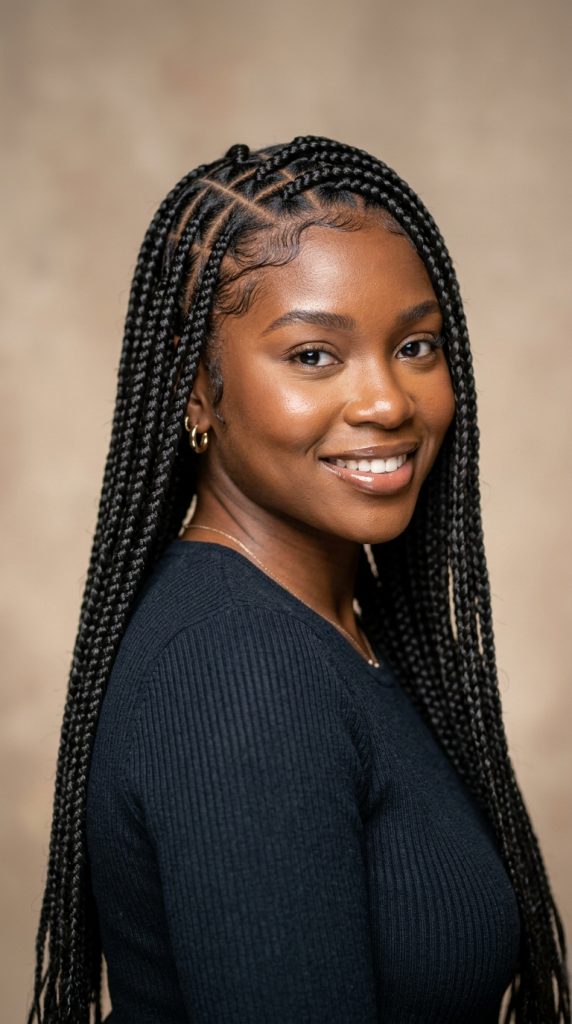
Box braids are one of the most iconic and widely loved braided hairstyles for Black women—and for good reason. This style involves sectioning the hair into small, square-shaped parts (“boxes”) and braiding extensions into each section. The result is a uniform, neat, and highly versatile look that can be styled in countless ways.
What makes box braids especially powerful is their balance between protection and flexibility. They protect your natural hair by keeping it tucked away, reducing daily manipulation and exposure to environmental damage. At the same time, they allow you to experiment with length, thickness, and even color without altering your natural hair.
If you have fine or fragile hair, box braids can be a game changer—but only when done correctly. The size of the braids and the tension used during installation play a huge role in how healthy your hair remains. Medium-sized box braids are often the safest option because they don’t put too much stress on your scalp while still giving a full, stylish look.
This works best when you want a long-lasting, low-maintenance style that still gives you plenty of styling freedom.
How to Implement (Practical Steps)
- Start with clean, deep-conditioned hair to ensure a healthy base
- Stretch or blow-dry your hair slightly to make braiding easier
- Choose your braid size (small, medium, or large—medium is ideal for balance)
- Use high-quality braiding hair extensions for a smoother finish
- Ensure your stylist doesn’t braid too tightly at the roots
- After installation, dip the ends in hot water to seal them
For maintenance:
- Wrap your hair at night with a silk or satin scarf
- Moisturize your scalp with a lightweight oil or spray
- Clean your scalp gently using diluted shampoo if needed
Best For (Who should use it)
- Women who want a long-lasting protective style
- Those who prefer versatile styling options (buns, ponytails, half-up styles)
- Anyone with a busy schedule who wants low daily maintenance
If you have a small room… think of box braids like smart storage—they give you structure while still allowing flexibility in how you use your space.
Pro Tip (Expert Advice)
Go for knotless box braids if you want less tension at the roots. They look more natural and feel lighter on the scalp.
Mistake to Avoid
Avoid making the braids too small if your hair is fine or your scalp is sensitive. Smaller braids can create excessive tension and lead to breakage over time.
2. Knotless Braids (Lightweight & Natural Look)
Explanation (What it is)
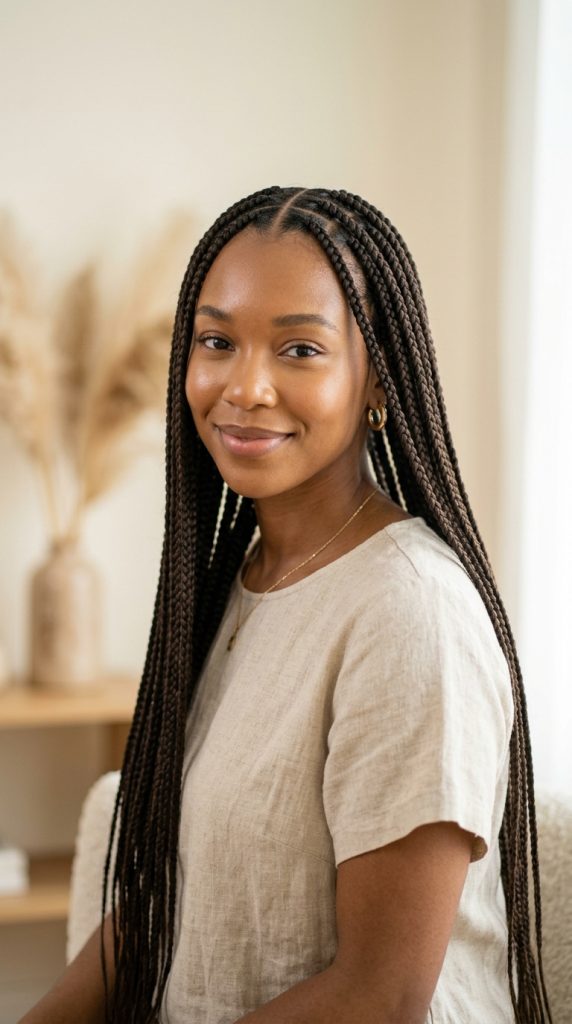
Knotless braids are a modern upgrade to traditional box braids. The key difference is in how they start—instead of beginning with a tight knot at the root, the stylist gradually feeds in the braiding hair. This creates a flatter, more natural-looking base and significantly reduces tension on the scalp.
For many women, this style solves one of the biggest problems with braids: discomfort. Traditional braids can feel tight and heavy, especially in the first few days. Knotless braids, on the other hand, are lightweight and flexible from the start, making them much more comfortable to wear.
They also move more naturally, which makes them look less bulky and more like your own hair. This works best when you want a protective style that doesn’t feel heavy or restrictive.
How to Implement (Practical Steps)
- Ask specifically for knotless braids when booking your appointment
- Decide on the braid size and length based on your lifestyle
- Make sure your stylist uses the feed-in technique properly
- Keep your scalp moisturized during and after installation
For styling:
- You can easily wear them down, in a bun, or in a ponytail
- Because they’re lightweight, they’re great for high styles
Maintenance:
- Use a satin bonnet or scarf at night
- Apply lightweight oils to keep your scalp hydrated
- Avoid excessive pulling or tight styling
Best For (Who should use it)
- Women with sensitive scalps
- Those who want a natural, less bulky look
- Anyone looking for a comfortable long-term style
This works best when comfort is just as important as appearance.
Pro Tip (Expert Advice)
Choose a medium density for your braids. Too many braids can still make the style feel heavy, even if it’s knotless.
Mistake to Avoid
Don’t skip proper installation just because the style is “gentler.” Poor technique can still cause tension and reduce the lifespan of the braids.
3. Cornrows (Sleek & Scalp-Friendly)
Explanation (What it is)
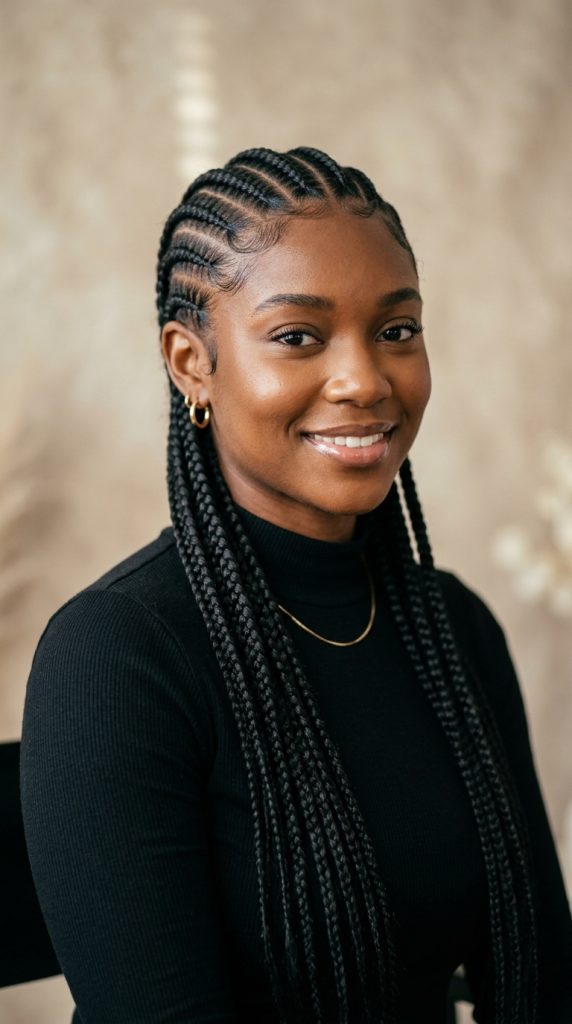
Cornrows are one of the most traditional and culturally significant braided styles. They involve braiding the hair close to the scalp in straight lines, curves, or intricate patterns. This style is sleek, neat, and highly customizable.
For Black women, cornrows are more than just a hairstyle—they’re a foundation for many other styles and a symbol of heritage and creativity. From simple straight-back cornrows to detailed designs, this style offers both simplicity and artistry.
One of the biggest advantages of cornrows is how low-maintenance they are. Since the braids lie flat against the scalp, they don’t require much daily styling. They’re also lightweight, making them comfortable even for extended wear.
This works best when you want a clean, polished look that’s easy to maintain.
How to Implement (Practical Steps)
- Start with clean, moisturized hair
- Section the hair into your desired pattern (straight, curved, or creative designs)
- Braid close to the scalp using consistent tension
- Add extensions if you want more length or thickness
For maintenance:
- Keep your scalp moisturized regularly
- Protect your hair at night with a satin scarf
- Avoid scratching your scalp excessively
You can also refresh your edges with a light styling gel to keep the look neat.
Best For (Who should use it)
- Women who want a low-maintenance, neat style
- Those who prefer protective styles without added weight
- Anyone looking for a short-term braided look (1–3 weeks)
If you have a small room… cornrows are like a minimalist setup—clean, organized, and efficient without unnecessary extras.
Pro Tip (Expert Advice)
Choose a pattern that complements your face shape. Curved or side-swept cornrows can add softness and dimension.
Mistake to Avoid
Don’t braid too tightly. Tight cornrows can cause scalp irritation and even hair loss if worn repeatedly with high tension.
4. Fulani Braids (Cultural & Statement Style)
Explanation (What it is)
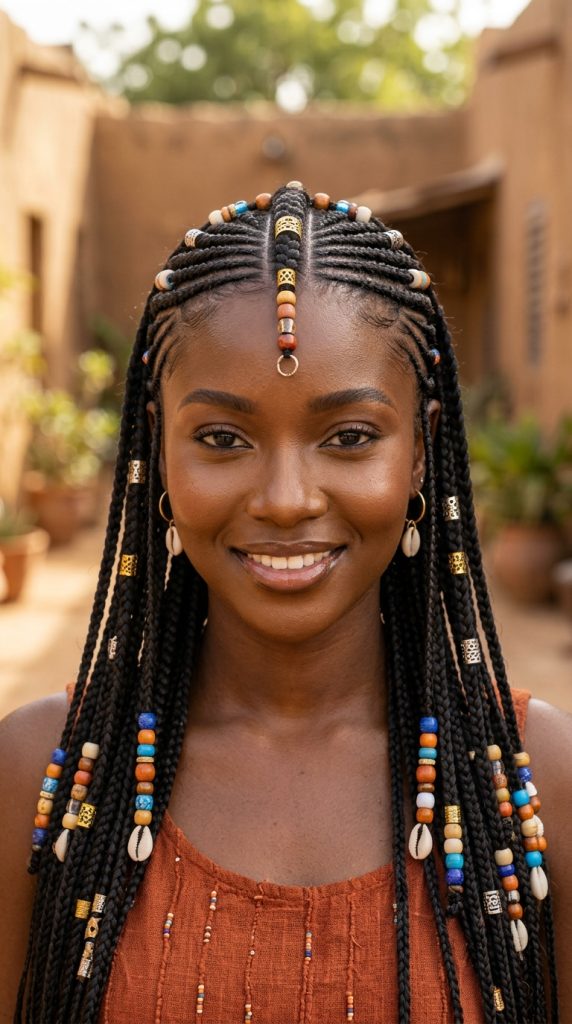
Fulani braids are a stunning, culturally rich hairstyle inspired by the Fulani people of West Africa. What makes this style unique is its signature pattern: a combination of cornrows braided toward the front of the head, often paired with loose braids, a central braid, and decorative elements like beads or cuffs.
This isn’t just a hairstyle—it’s a statement. Fulani braids stand out because they combine structure with creativity. The mix of tight cornrows and free-hanging braids adds both dimension and movement, which is especially helpful if your hair tends to look flat in simpler styles.
For Black women with fine or medium-density hair, this style works beautifully because it distributes weight evenly across the scalp. Instead of putting tension in one area, the design spreads it out, making it more comfortable than it looks.
This works best when you want a bold, eye-catching style that still protects your natural hair.
How to Implement (Practical Steps)
- Start with clean, stretched hair (blow-dried or lightly stretched)
- Decide on your pattern: center part, side part, or custom design
- Ask your stylist to create front-to-back cornrows with a signature center braid
- Add individual braids or extensions at the back for length and fullness
- Incorporate beads, cuffs, or rings for a traditional finish
For maintenance:
- Wrap your hair with a satin scarf at night
- Oil your scalp lightly 2–3 times a week
- Avoid heavy products that can cause buildup around beads
Best For (Who should use it)
- Women who want a cultural, standout hairstyle
- Those who enjoy accessorizing their hair
- Anyone looking for a protective style with personality
If you have a small room… this is like adding statement decor—it draws attention and adds character without needing a full makeover.
Pro Tip (Expert Advice)
Keep accessories lightweight. Heavy beads can pull on your roots and cause unnecessary tension over time.
Mistake to Avoid
Don’t overload the style with too many patterns or accessories. It can look overwhelming and reduce the elegance of the design.
5. Senegalese Twists (Soft & Lightweight Alternative)
Explanation (What it is)
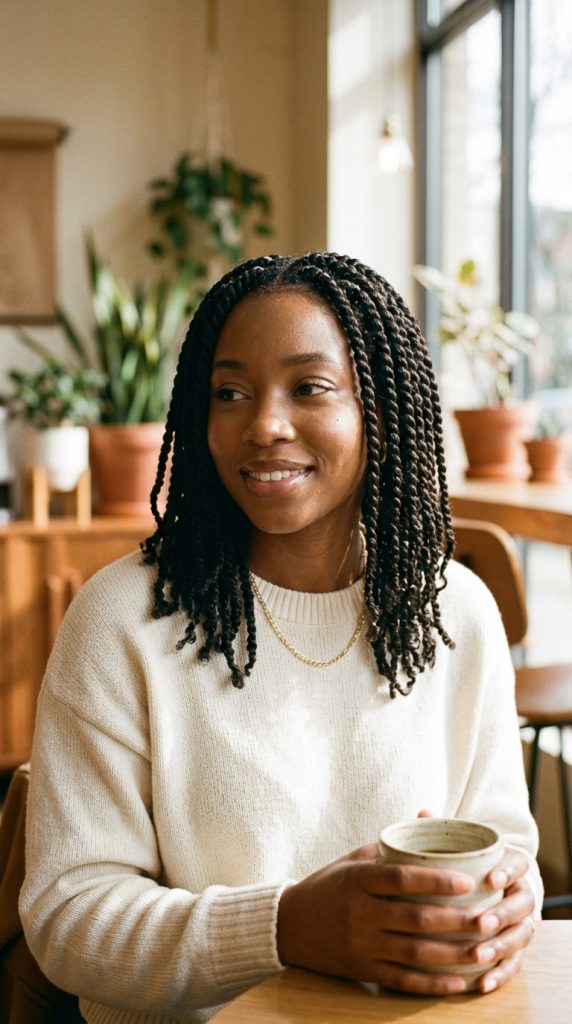
Senegalese twists are a two-strand twisting style that uses extensions to create smooth, rope-like braids. Unlike traditional braids, these twists have a softer, silkier appearance, making them a great alternative if you want something lightweight and less structured.
For fine hair, this style can feel more comfortable because it doesn’t require as much tension as tighter braid styles. The twists also move more freely, which gives a natural, flowing look that many women prefer.
One of the biggest advantages of Senegalese twists is how gentle they are on your scalp. If you’ve ever experienced discomfort with tight braids, this style can be a much better option.
This works best when you want a protective style that feels light, looks elegant, and doesn’t put too much stress on your hair.
How to Implement (Practical Steps)
- Start with clean, moisturized, and stretched hair
- Section the hair evenly depending on your desired twist size
- Use smooth braiding hair (like Kanekalon or similar)
- Twist two strands together from root to tip
- Seal the ends using hot water or a small amount of product
For styling:
- Wear them down, in a bun, or in a ponytail
- You can also create half-up styles easily
Maintenance:
- Wrap with a satin scarf or bonnet at night
- Use a light oil spray to keep twists shiny and hydrated
- Avoid over-manipulating to prevent frizz
Best For (Who should use it)
- Women with sensitive scalps
- Those who prefer a softer, more natural look
- Anyone looking for a lightweight protective style
This works best when comfort and flexibility are your top priorities.
Pro Tip (Expert Advice)
Choose medium-sized twists for the best balance between fullness and longevity. Very small twists can take longer to install and may frizz faster.
Mistake to Avoid
Don’t twist too tightly at the roots. Even though twists are softer, tight installation can still cause tension and discomfort.
6. Goddess Braids (Thick & Elegant Look)
Explanation (What it is)
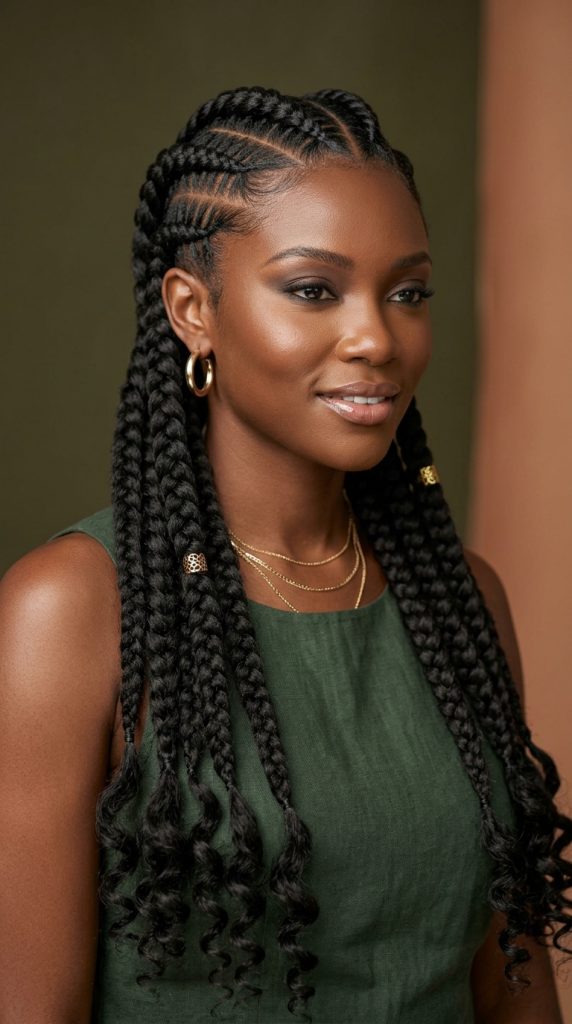
Goddess braids are essentially larger, thicker versions of cornrows, often styled in bold patterns or sweeping designs. They sit on top of the scalp and create a raised, defined look that feels both regal and elegant.
This style is perfect if you want something that stands out but doesn’t require hours of installation like smaller braids. Because the braids are larger, they take less time to complete and are easier to maintain.
For fine hair, goddess braids can be especially helpful because they create the illusion of fullness without needing a large number of braids. The thickness of each braid gives your hair a more voluminous appearance overall.
This works best when you want a protective style that looks polished and makes an impact.
How to Implement (Practical Steps)
- Begin with clean, detangled, and moisturized hair
- Section the hair into larger parts depending on your design
- Braid close to the scalp using thicker sections of hair
- Add extensions if you want more volume or length
- Create patterns like straight back, side-swept, or circular designs
For styling:
- You can leave them as-is or gather them into a bun or updo
- Add edge styling for a more finished look
Maintenance:
- Moisturize your scalp regularly
- Protect your hair at night with a satin wrap
- Refresh edges as needed
Best For (Who should use it)
- Women who want a bold yet elegant hairstyle
- Those looking for a quick protective style
- Anyone who prefers low daily maintenance
If you have a small room… this is like using bold furniture pieces—they instantly fill the space and create a strong visual impact.
Pro Tip (Expert Advice)
Keep the parts clean and well-defined. Neat sections make a huge difference in how polished the final style looks.
Mistake to Avoid
Don’t keep goddess braids in for too long. Since they’re larger, they can loosen faster and may not last as long as smaller braid styles.
7. Lemonade Braids (Side-Swept & Trendy)
Explanation (What it is)
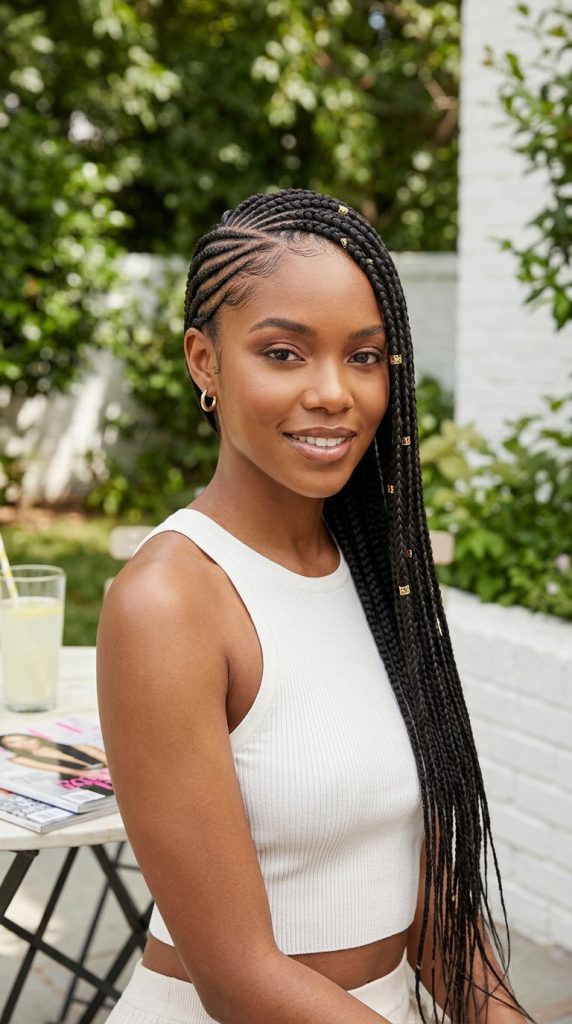
Lemonade braids are a stylish variation of cornrows that are braided to one side instead of going straight back. Popularized by Beyoncé, this hairstyle quickly became a go-to look for women who want something sleek but more visually interesting than traditional cornrows.
What makes lemonade braids stand out is the direction and flow. The side-swept pattern naturally adds dimension and makes your hair look fuller, especially around the crown and sides. For fine hair, this is a huge advantage because straight-back styles can sometimes emphasize flatness, while side patterns create movement and volume.
This style also frames the face beautifully, giving a softer and more flattering look compared to rigid straight lines. It’s a perfect mix of edgy and elegant.
This works best when you want a trendy, statement hairstyle that still feels wearable for everyday life.
How to Implement (Practical Steps)
- Start with clean, stretched hair
- Create a deep side part as the base
- Braid cornrows diagonally toward one side of the head
- Add extensions for length and fullness if needed
- Keep the braid size consistent for a clean finish
For styling:
- You can leave the braids flowing to one side
- Or tie them into a low side ponytail or bun
Maintenance:
- Wrap your hair at night with a satin scarf
- Keep your scalp moisturized
- Avoid excessive pulling when styling
Best For (Who should use it)
- Women who want a modern, trendy braided look
- Those with fine hair needing more visual volume
- Anyone who likes side-swept styles that frame the face
If you have a small room… this is like placing furniture diagonally—it adds depth and makes the space feel more dynamic.
Pro Tip (Expert Advice)
Keep the braids medium in size. Too small can take longer and add tension, while too large can reduce the detail that makes this style stand out.
Mistake to Avoid
Don’t make the side part too extreme unless it suits your face shape. A balanced angle looks more natural and flattering.
8. Crochet Braids (Quick & Versatile Option)
Explanation (What it is)
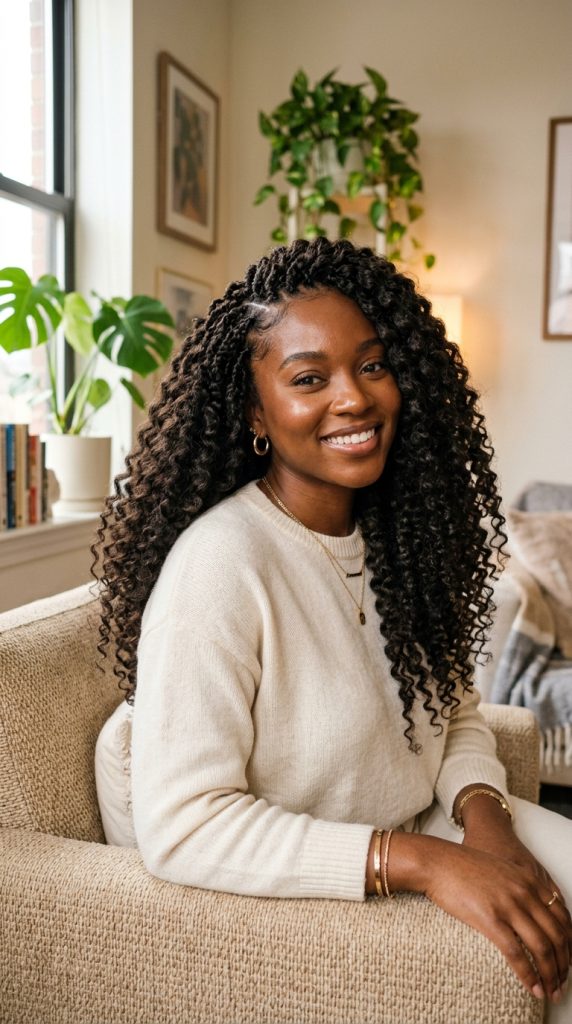
Crochet braids are a technique rather than a specific braid style. Your natural hair is first braided into cornrows, and then extensions are “crocheted” into those braids using a special hook. This allows you to achieve a wide variety of looks—from braids and twists to curls and waves—without individually braiding your entire head.
For Black women with fine hair, this style is incredibly practical. It reduces tension because your natural hair is braided underneath, and the extensions are added without pulling directly on your roots. This makes it a safer option if you’re trying to avoid breakage or scalp stress.
Another major advantage is speed. Compared to traditional braiding styles that can take several hours, crochet braids are much quicker to install.
This works best when you want flexibility, convenience, and minimal stress on your hair.
How to Implement (Practical Steps)
- Braid your natural hair into neat cornrows (straight back or patterned)
- Choose your desired crochet hair (braids, twists, curls, etc.)
- Use a crochet hook to loop the extensions into your cornrows
- Secure each piece properly to prevent slipping
For styling:
- Trim or shape the hair to suit your face
- Style as desired depending on the texture (curly, braided, etc.)
Maintenance:
- Keep your scalp clean and moisturized
- Sleep with a satin bonnet
- Avoid heavy products that can cause buildup
Best For (Who should use it)
- Women who want a quick protective style
- Those looking for low tension on the scalp
- Anyone who likes to switch styles frequently
This works best when you want a new look without committing to long installation hours.
Pro Tip (Expert Advice)
Choose lightweight crochet hair. Heavy extensions can still put stress on your cornrows and cause discomfort over time.
Mistake to Avoid
Don’t install too much hair. Overloading the crochet braids can make the style look bulky and unnatural.
9. Micro Braids (Long-Lasting & Detailed Look)
Explanation (What it is)
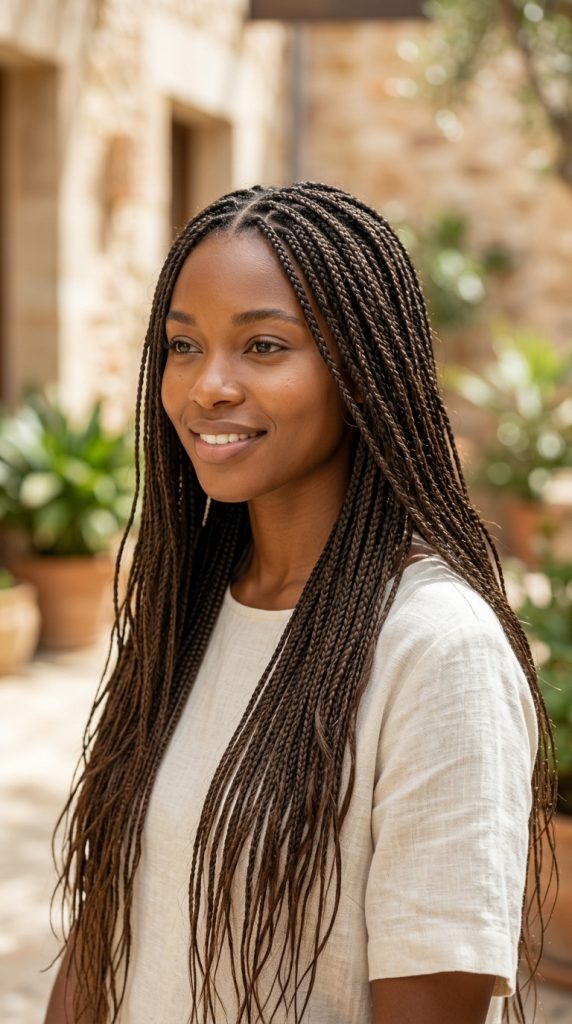
Micro braids are extremely small, delicate braids that create a very detailed and natural-looking finish. Because they are so fine, they mimic the movement of loose hair more closely than larger braids.
This style is known for its versatility—you can wear it down, style it into updos, or even curl the ends for a different look. It gives you the freedom of loose hair while still being a protective style.
However, for fine hair, this style requires extra care. While micro braids can look beautiful, they can also create tension if installed too tightly or if your hair isn’t strong enough to support them. That’s why proper technique and spacing are critical.
This works best when you want a long-lasting, highly flexible hairstyle and are willing to invest time in both installation and maintenance.
How to Implement (Practical Steps)
- Start with strong, well-conditioned hair
- Section hair into very small, even parts
- Braid carefully using light tension
- Add extensions if desired for length
For styling:
- Wear them loose, in ponytails, buns, or braided styles
- You can also curl the ends for added texture
Maintenance:
- Moisturize regularly to prevent dryness
- Clean your scalp gently without disturbing the braids
- Avoid heavy styling that pulls on the roots
Best For (Who should use it)
- Women who want a natural, free-flowing braided look
- Those who like maximum styling versatility
- Anyone prepared for a longer installation process
If you have a small room… this is like using many small design details—they create a rich, full look, but only when done carefully and thoughtfully.
Pro Tip (Expert Advice)
Take breaks between installations. Micro braids can be demanding on your hair, so giving your scalp time to recover is essential.
Mistake to Avoid
Don’t leave micro braids in for too long. Because they are small, they can lead to tangling and breakage at the roots if not removed on time.
10. Tribal Braids (Bold Patterns & Creative Expression)
Explanation (What it is)
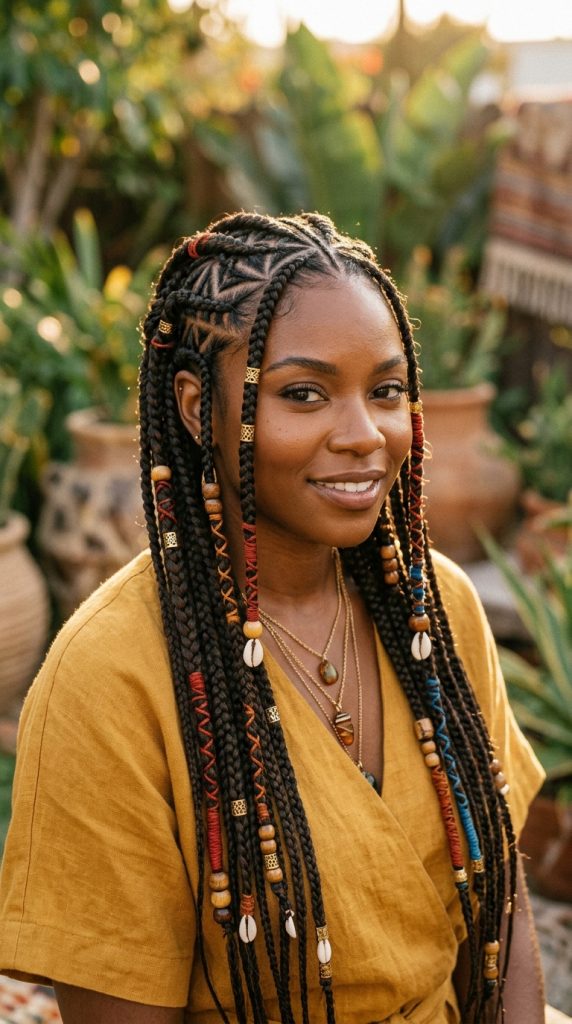
Tribal braids are a highly creative and expressive braided style that combines different braid sizes, patterns, and sometimes accessories into one cohesive look. Inspired by traditional African braiding techniques, this style allows for a lot of customization—no two tribal braid styles look exactly the same.
What makes tribal braids special is the mix of structure and individuality. You might see a combination of cornrows, box braids, Fulani-inspired sections, and even beads or cuffs—all working together to create a unique design. For fine hair, this variety can actually help create the illusion of fullness because different braid sizes add visual depth.
This style is perfect if you want something that feels personal and stands out from standard braid styles. It’s less about following a strict pattern and more about creating a look that suits your personality.
This works best when you want a custom, statement hairstyle that reflects your style.
How to Implement (Practical Steps)
- Start with clean, moisturized, and stretched hair
- Work with a stylist to design a custom braid pattern
- Combine different braid types (cornrows + individual braids)
- Use extensions to add length and volume where needed
- Add accessories like beads or cuffs if desired
For maintenance:
- Wrap with a satin scarf at night
- Keep your scalp hydrated with light oils
- Clean gently to avoid disturbing the pattern
Best For (Who should use it)
- Women who want a unique, standout hairstyle
- Those who enjoy creative and artistic looks
- Anyone looking for a protective style with personality
If you have a small room… this is like mixing textures and decor styles—it creates depth and makes the space feel more interesting.
Pro Tip (Expert Advice)
Plan your design in advance. Bringing reference photos helps your stylist understand exactly what you want.
Mistake to Avoid
Don’t overcrowd the style with too many elements. Too much going on can make the look feel messy instead of intentional.
11. Feed-In Braids (Natural & Scalp-Friendly)
Explanation (What it is)
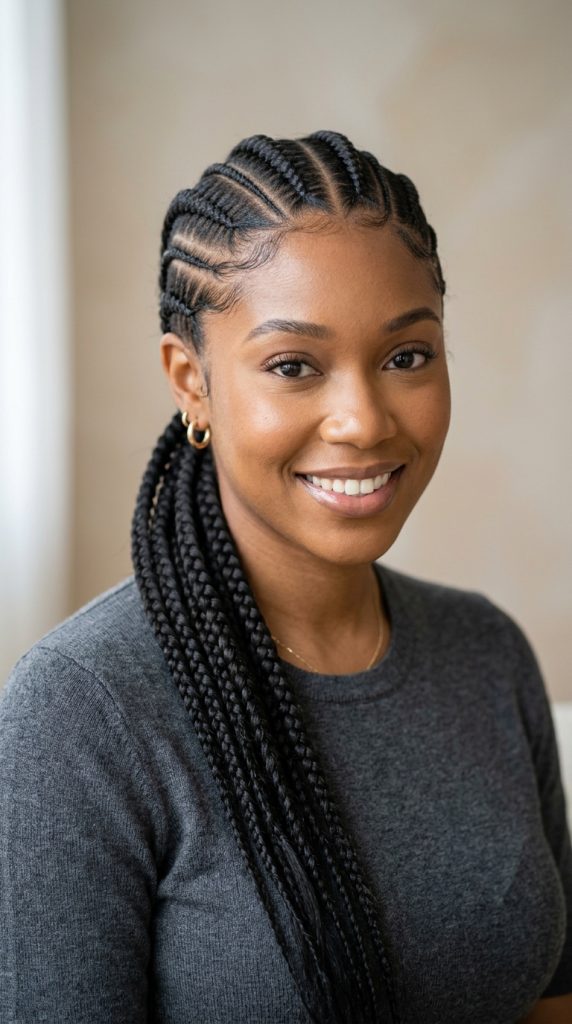
Feed-in braids are a technique used to create a more natural-looking braid that starts small at the root and gradually becomes thicker as extensions are added. Unlike traditional braids that begin with a noticeable knot, feed-in braids blend seamlessly with your natural hair.
For Black women with fine hair, this style is especially beneficial because it reduces tension at the roots. Instead of placing all the weight at the base, the hair is built up धीरे-धीरे (gradually), making the braids feel lighter and more comfortable.
Another advantage is how neat and polished the final result looks. The gradual thickness gives a smooth, professional finish that works well for both casual and formal settings.
This works best when you want a clean, natural-looking braid style without heavy roots.
How to Implement (Practical Steps)
- Begin with clean, detangled hair
- Section hair into your desired braid pattern
- Start braiding with your natural hair first
- Gradually feed in extension hair as you braid downward
- Maintain consistent tension for a smooth finish
For styling:
- Wear them straight back, in a ponytail, or in creative patterns
- Add subtle accessories if desired
Maintenance:
- Keep your scalp moisturized
- Protect your hair at night with satin
- Avoid pulling the braids into tight styles too often
Best For (Who should use it)
- Women with fine or sensitive hair
- Those who want a natural, lightweight braid look
- Anyone who prefers less tension on the scalp
This works best when comfort and neatness are equally important.
Pro Tip (Expert Advice)
Ask for smaller feed-in sections at the front and slightly larger ones at the back. This creates a more natural hairline appearance.
Mistake to Avoid
Don’t rush the process. Feed-in braids require precision—poor technique can lead to uneven thickness and a less polished look.
12. Halo Braid (Elegant & Protective Updo)
Explanation (What it is)
The halo braid is a beautiful updo where the braid wraps around your head like a crown. It’s elegant, timeless, and perfect for occasions where you want a refined look without exposing your natural hair.
For fine hair, this style works well because it gathers all your hair into one structured braid, creating the appearance of fullness. It also keeps your ends tucked away, making it a great protective option.
This style can be done using your natural hair or with added extensions for more volume. Either way, it creates a soft, regal look that feels both classic and modern.
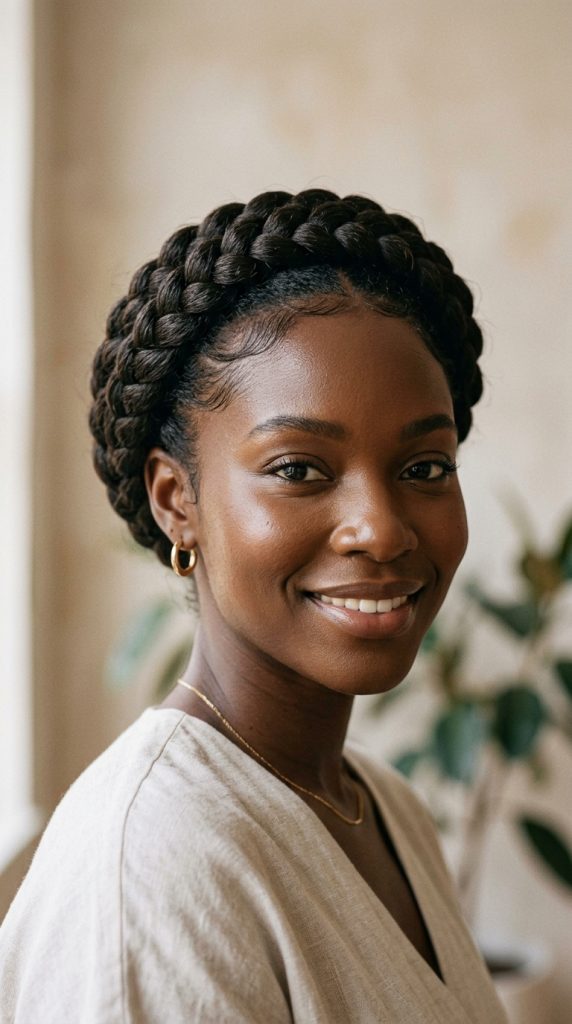
This works best when you want a low-manipulation style that looks polished and sophisticated.
How to Implement (Practical Steps)
- Start with moisturized and detangled hair
- Create a deep side or middle part if desired
- Braid your hair around the perimeter of your head
- Secure the braid with pins or tuck the ends neatly
- Add extensions if you want a fuller halo
For styling:
- Smooth your edges for a clean finish
- Add subtle accessories for special occasions
Maintenance:
- Sleep with a satin scarf
- Keep your scalp hydrated
- Refresh edges as needed
Best For (Who should use it)
- Women who want an elegant, formal hairstyle
- Those looking for a protective updo
- Anyone who prefers low daily styling effort
If you have a small room… this is like using vertical space efficiently—it keeps everything neat while still looking stylish.
Pro Tip (Expert Advice)
Loosen the braid slightly after styling. This creates a fuller, softer appearance instead of a tight, flat look.
Mistake to Avoid
Don’t braid too tightly around the edges. This area is sensitive and can be prone to breakage.
13. Jumbo Braids (Quick & Bold Style)
Explanation (What it is)
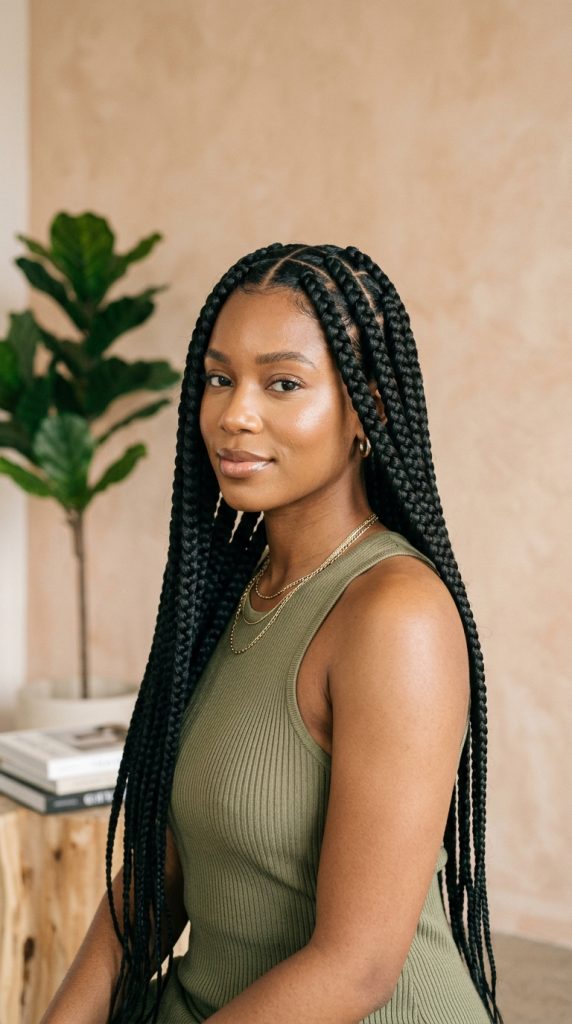
Jumbo braids are large, thick braids that are designed to be bold, eye-catching, and quick to install. Because each braid uses more hair, fewer braids are needed overall, which significantly reduces installation time.
For Black women with fine hair, jumbo braids can be a great option when done carefully. They create the illusion of volume without requiring a high number of braids, which means less tension across the scalp.
This style is perfect if you want something impactful but don’t want to spend hours in a salon chair. It’s also easier to maintain compared to smaller, more detailed braid styles.
This works best when you want a fast, stylish, and low-maintenance protective hairstyle.
How to Implement (Practical Steps)
- Start with clean, stretched hair
- Section hair into larger parts
- Braid using thick sections of hair or extensions
- Keep the braids consistent in size for a balanced look
For styling:
- Wear them down, in a bun, or in a ponytail
- Add accessories if you want a more decorative look
Maintenance:
- Wrap your hair at night
- Keep your scalp moisturized
- Avoid excessive pulling or tight styling
Best For (Who should use it)
- Women who want a quick protective style
- Those who prefer bold, statement looks
- Anyone looking for low-maintenance braids
If you have a small room… this is like using fewer, larger furniture pieces—it fills the space quickly and efficiently.
Pro Tip (Expert Advice)
Don’t make the braids too heavy. Use lightweight extensions to reduce strain on your roots.
Mistake to Avoid
Don’t keep jumbo braids in for too long. Because they’re larger, they can loosen faster and may not hold their shape for extended periods.