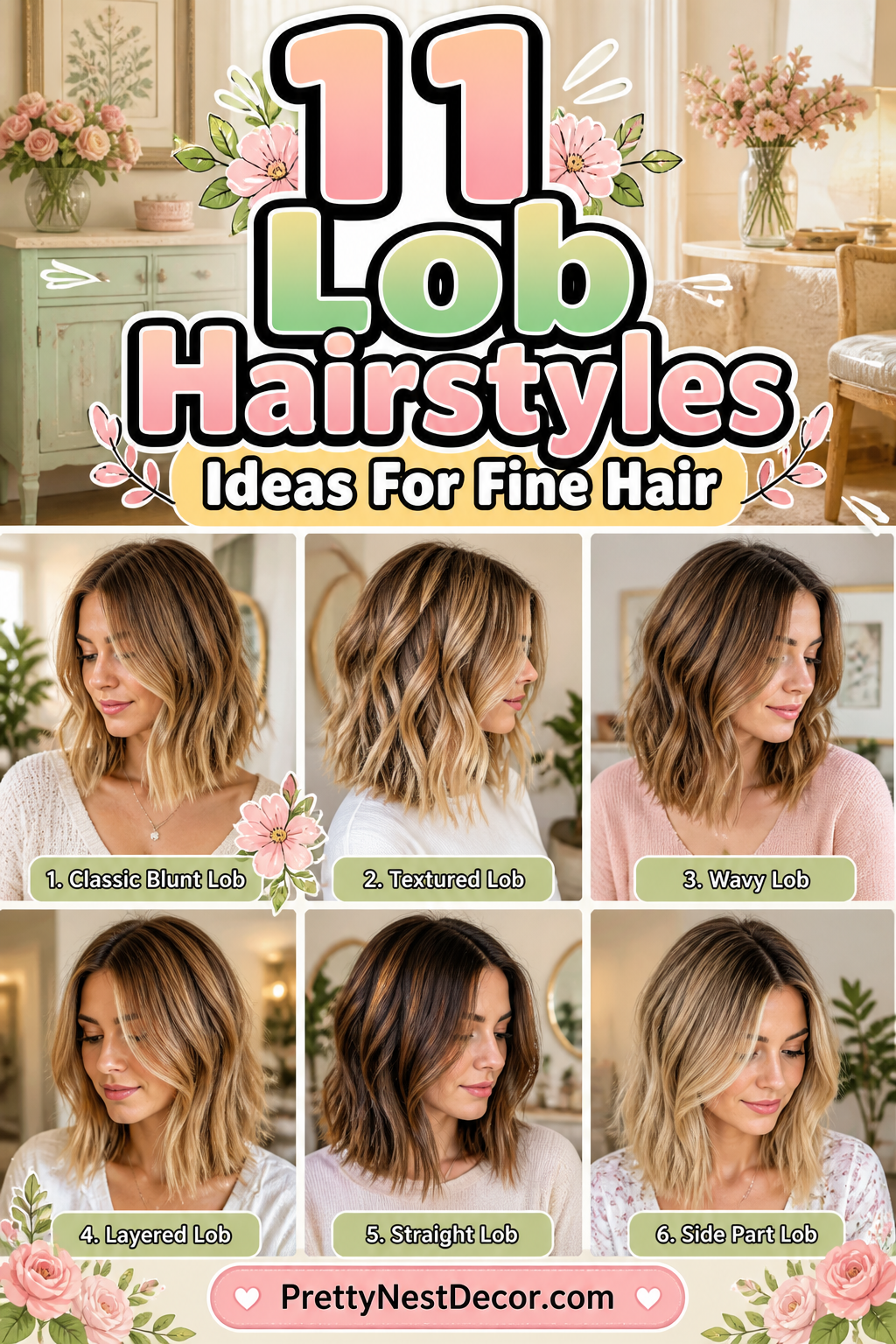
11 Lob Hairstyles Ideas For Fine Hair
If you have fine hair, you already know the struggle—it can fall flat within hours, refuse to hold volume, and sometimes make even the most stylish haircut look lifeless. You might have tried countless products, watched endless tutorials, and still felt like your hair just doesn’t cooperate the way you want it to. The truth is, when it comes to fine hair, the haircut you choose matters just as much—if not more—than the styling products you use. And that’s exactly where lob hairstyles come in.
The “lob,” short for long bob, has become one of the most versatile and flattering haircuts in recent years—and for good reason. It sits perfectly between short and long hair, giving you the freedom to style it in multiple ways while still being manageable and lightweight. But here’s something most people don’t realize: lob hairstyles are especially powerful for fine hair. When done right, they can instantly create the illusion of thickness, movement, and volume without requiring excessive styling.
If you have a small room… imagine how the right furniture placement can make it feel bigger and more open. Hair works in a similar way. The right cut—like a well-structured lob—can visually “expand” your hair, making it look fuller and more dynamic. On the other hand, the wrong haircut can do the opposite, making fine hair look even thinner and harder to manage. That’s why understanding the details of lob hairstyles is so important if you want to get the best results.
One of the biggest problems people with fine hair face is choosing styles that are too heavy or too long. While long hair can look beautiful, it often weighs fine strands down, making them appear flat and lifeless. On the flip side, going too short can sometimes limit your styling options or make your hair harder to manage on a daily basis. The lob sits right in the sweet spot—it’s long enough to give you styling flexibility but short enough to maintain natural volume.
Another common issue is layering. Many people assume that adding lots of layers will automatically create volume, but with fine hair, too many layers can actually make your ends look thin and uneven. This works best when layering is done strategically, focusing on movement rather than removing too much weight. A well-designed lob balances structure and softness, giving your hair body without sacrificing fullness.
You might also struggle with styling that doesn’t last. You spend time curling or blow-drying your hair, only for it to lose shape within a few hours. This is where the right lob haircut makes a difference again. When your hair is cut to support volume naturally, you don’t have to rely entirely on heat tools or heavy products. Instead, your hairstyle works with your hair type, not against it.
In this article, you’ll discover a collection of lob hairstyle ideas specifically designed for fine hair—but not just surface-level inspiration. Each idea will be explained in detail so you understand exactly what makes it work, how to style it, and whether it’s the right choice for your lifestyle. This isn’t about copying a trend blindly; it’s about choosing a style that genuinely suits your hair and makes your daily routine easier.
You’ll learn how to create the illusion of thicker hair through smart cutting techniques, subtle layering, and the right length choices. You’ll also get practical tips that you can actually use—whether you style your hair every day or prefer low-maintenance looks. This works best when you understand not just what to do, but why it works, so you can make better decisions even beyond this article.
We’ll also talk about common mistakes people make with lob hairstyles for fine hair—because sometimes avoiding the wrong choices is just as important as picking the right ones. Small details, like where the cut falls on your shoulders or how the ends are finished, can completely change the final result. These are the kinds of insights that often get overlooked in typical blog posts, but they make a huge difference in real life.
Another thing you’ll find here is realistic advice. Not everyone has the time or tools to style their hair perfectly every day, and that’s completely okay. The goal is to help you find a lob hairstyle that fits your routine, whether you prefer air-drying, quick styling, or more polished looks for special occasions. Your haircut should support your lifestyle—not complicate it.
By the end of this guide, you’ll have a clear understanding of which lob styles work best for fine hair and how to make them work for you. You’ll feel more confident discussing your options with your hairstylist and making choices that actually improve the look and feel of your hair. Instead of guessing or following random trends, you’ll be making informed decisions based on what truly suits your needs.
So if you’ve been feeling stuck with flat, lifeless hair or unsure about which haircut to try next, you’re in the right place. The right lob hairstyle can completely transform not just how your hair looks, but how easy it is to manage every single day—and that’s exactly what we’re going to explore in detail.
1. Blunt Cut Lob for Maximum Thickness Illusion
Explanation (What it is)
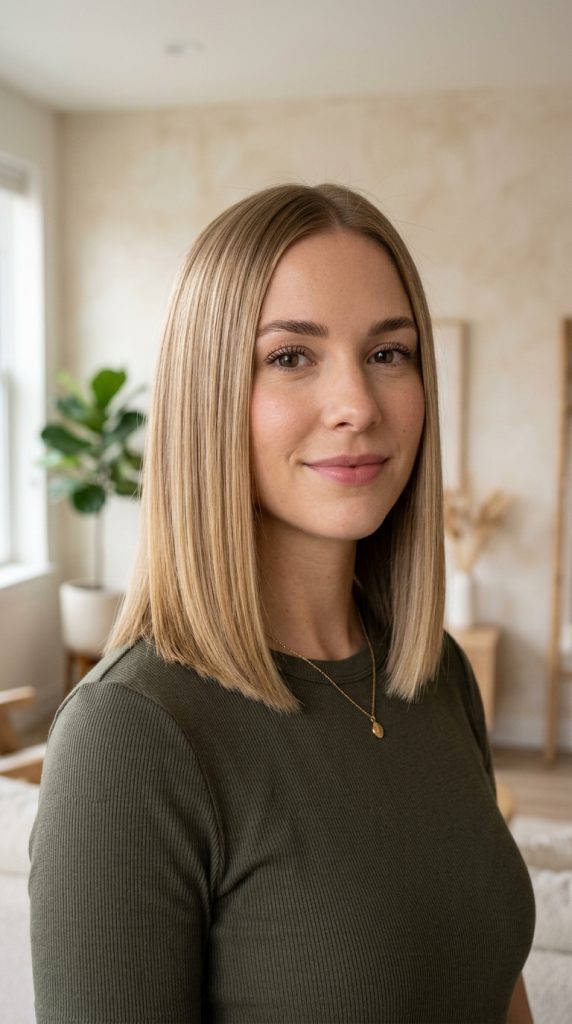
The blunt cut lob is one of the most powerful hairstyles you can choose if you have fine hair. Unlike layered cuts that remove weight, a blunt lob keeps all the ends at the same length, creating a clean, sharp line. This straight-across finish instantly makes your hair look denser and thicker because there are no wispy or uneven ends.
If you have fine hair, this style works almost like a visual trick. Instead of your hair tapering off at the bottom—which often makes it look thin—the blunt cut creates a solid, full edge. This makes a huge difference, especially when your hair is straight or slightly wavy. It gives structure, polish, and a fuller appearance without needing heavy styling.
This works best when your hair naturally lacks volume at the ends. The blunt finish keeps everything looking compact and healthy, rather than stretched out and flat.
How to Implement (Practical Steps)
Start by asking your stylist specifically for a blunt lob with no layers or very minimal internal layering. The length should ideally fall between your collarbone and shoulders—this is the sweet spot where your hair won’t get weighed down.
When styling:
- Use a lightweight volumizing shampoo and conditioner
- Blow-dry your hair using a round brush, lifting at the roots
- Keep the ends straight or slightly tucked in for a polished finish
- Avoid overusing serums on the ends, as they can make hair look greasy and flat
If you prefer a more relaxed look, you can also air-dry your hair and just smooth the ends slightly with a flat iron.
Best For (Who should use it)
- People with very fine, straight hair
- Anyone struggling with thin-looking ends
- Those who prefer a low-maintenance yet polished style
If you have a small room… think of this like using clean lines and minimal furniture—it makes everything look more structured and spacious. The blunt lob does the same for your hair.
Pro Tip (Expert Advice)
Ask your stylist to slightly texturize the interior (not the ends). This keeps the blunt look intact while adding hidden movement, so your hair doesn’t feel too heavy or stiff.
Mistake to Avoid
Don’t add too many layers thinking it will create volume. With fine hair, excessive layering can actually destroy the thickness illusion and make your ends look even thinner.
2. Textured Lob with Soft Layers
Explanation (What it is)
The textured lob is a softer, more relaxed version of the classic lob. Instead of a sharp blunt edge, this style uses subtle, well-placed layers to create movement and dimension. The goal here is not to remove bulk, but to add life to hair that might otherwise look flat.
Fine hair often lacks natural texture, which is why it can fall flat quickly. A textured lob solves this by introducing gentle variation throughout the hair, making it easier to style and hold shape. The result is a hairstyle that looks effortless, slightly undone, and full of movement.
This works best when you want a more casual, modern look instead of something sleek and structured.

How to Implement (Practical Steps)
When getting this cut:
- Ask for soft, minimal layers (not choppy or aggressive ones)
- Keep the length around the shoulders or slightly above
- Request light texturizing at the ends for movement
For styling:
- Use a texturizing spray or sea salt spray on damp hair
- Blow-dry using your fingers instead of a brush for a natural finish
- Add loose waves using a curling wand (wrap sections loosely, not tightly)
- Finish with a lightweight texture spray
If you don’t like heat styling, you can braid your hair overnight for natural waves.
Best For (Who should use it)
- People who want a messy, effortless look
- Those with slightly wavy or bendable fine hair
- Anyone who struggles with hair that looks too flat or “lifeless”
This works best when you want your hair to look like you didn’t try too hard—but still look stylish.
Pro Tip (Expert Advice)
Focus volume at the crown area, not the ends. Lift at the roots while keeping the ends light and airy—this creates a balanced, fuller look.
Mistake to Avoid
Avoid over-texturizing. Too much thinning or razoring can make fine hair look frizzy and weak instead of voluminous.
3. Angled Lob (A-Line Lob) for Natural Volume Boost
Explanation (What it is)
The angled lob, also known as the A-line lob, is shorter at the back and gradually longer toward the front. This shape naturally creates movement and gives the illusion of thicker hair, especially around the face.
For fine hair, this cut is incredibly effective because it redistributes weight in a smart way. The shorter back adds lift and volume, while the longer front frames the face and keeps the style elegant and modern.
If your hair tends to fall flat at the back, this style can completely change how your hair behaves. It creates built-in volume without needing constant styling.

How to Implement (Practical Steps)
When visiting your stylist:
- Ask for a soft angled lob, not a dramatic one
- Keep the back slightly shorter but not too stacked
- Ensure the front length stays around the collarbone
For styling:
- Blow-dry the back with a round brush to create lift
- Keep the front sleek or slightly curved inward
- Use a volumizing mousse at the roots before drying
- Add a light shine spray for a polished finish
If you want a more casual look, you can add soft waves to enhance the angle.
Best For (Who should use it)
- People with flat roots, especially at the back
- Those who want a face-framing effect
- Anyone looking for a modern, stylish upgrade
If you have a small room… this is like placing furniture in a diagonal layout—it adds depth and dimension. The angled lob does the same for your hair.
Pro Tip (Expert Advice)
Keep the angle subtle. A slight difference in length looks more natural and is easier to maintain daily.
Mistake to Avoid
Don’t go too extreme with the angle. A very sharp difference between front and back can make fine hair look uneven and harder to style.
4. Layered Lob with Face-Framing Pieces
Explanation (What it is)
The layered lob with face-framing pieces is a strategic haircut designed to add softness and dimension without sacrificing fullness. Unlike heavy layering all over the head, this style focuses on adding lighter layers mainly around the front. These face-framing sections help create movement and draw attention toward your facial features instead of the thinness of your hair.
For fine hair, this is a smart compromise. You get the benefit of layers—movement, shape, and style—without removing too much bulk from the ends. The front pieces also break up the flatness that fine hair often has, especially when worn straight.
This works best when your hair tends to look flat around your face or lacks shape when parted in the middle or side.

How to Implement (Practical Steps)
When getting this haircut:
- Ask for a lob with subtle face-framing layers starting around the chin
- Keep the back mostly one length to maintain thickness
- Avoid excessive layering throughout the entire head
For styling:
- Blow-dry the front sections using a round brush, curving them slightly inward or outward
- Keep the rest of your hair simple—straight or lightly waved
- Use a lightweight volumizing spray at the roots
- Add a small amount of styling cream only to the front pieces for definition
If you prefer low effort, even a simple middle part with softly tucked front layers can look polished.
Best For (Who should use it)
- People who feel their hair looks flat around the face
- Those who want a soft, feminine shape
- Anyone who likes subtle styling without too much effort
This works best when you want to enhance your natural look rather than completely change it.
Pro Tip (Expert Advice)
Keep the face-framing pieces slightly longer rather than too short. Longer layers are more versatile and easier to style daily.
Mistake to Avoid
Don’t cut the front layers too short or too thick. This can make fine hair look stringy and disconnected from the rest of the cut.
5. Wavy Lob for Effortless Volume
Explanation (What it is)
The wavy lob is less about the cut itself and more about how the haircut supports natural or styled waves. Adding waves to a lob instantly creates the illusion of thicker, fuller hair because it introduces bends and curves that break up flatness.
Fine hair often struggles to hold volume, but it can hold soft waves surprisingly well when styled correctly. The key is not to go for tight curls, but loose, natural-looking waves that add width and body.
This style gives a relaxed, Pinterest-worthy look that feels modern and easy. It’s perfect if you want your hair to look fuller without changing the structure of your haircut too much.

How to Implement (Practical Steps)
Start with a lob that has very light layering or a slightly textured finish.
For styling:
- Apply a heat protectant and a light mousse
- Use a curling wand with a medium barrel
- Wrap sections loosely, leaving the ends out
- Alternate the direction of curls for a natural effect
- Break up the waves with your fingers, not a brush
- Finish with a texturizing spray for hold and volume
If you don’t like heat styling:
- Braid damp hair into 2–4 loose braids overnight
- In the morning, open them gently and add a light spray
Best For (Who should use it)
- People who want instant volume without cutting too much hair
- Those who like a casual, trendy look
- Anyone whose hair struggles to look full when straight
This works best when your hair has at least a slight natural bend or can hold a wave with minimal effort.
Pro Tip (Expert Advice)
Always leave the ends slightly straight when curling. This keeps the look modern and prevents your hair from appearing shorter or overly styled.
Mistake to Avoid
Don’t use too much hairspray or heavy products. Fine hair can quickly become stiff and lose its natural movement.
6. Lob with Curtain Bangs
Explanation (What it is)
A lob with curtain bangs combines the volume-boosting benefits of a lob with the face-framing softness of parted bangs. Curtain bangs are longer, softer bangs that split in the middle and blend into the rest of your hair.
For fine hair, this style works incredibly well because it adds volume at the front without requiring thick, heavy bangs. Traditional blunt bangs can sometimes make fine hair look thinner overall, but curtain bangs are lighter and more flexible.
They also create the illusion of fullness around the crown and face, which is where fine hair often looks the flattest.
This works best when you want a noticeable change without sacrificing too much length or thickness.

How to Implement (Practical Steps)
When getting this cut:
- Ask for a lob with soft curtain bangs starting around cheekbone level
- Ensure the bangs blend smoothly into the rest of your hair
- Keep the overall cut slightly textured for better movement
For styling:
- Blow-dry the bangs using a round brush, directing them away from the face
- Use a volumizing spray at the roots
- Style the rest of your hair straight or with soft waves
- Lightly set the bangs with a flexible hold spray
If you’re short on time, even a quick blow-dry just for the bangs can make a big difference.
Best For (Who should use it)
- People who want to add volume at the front
- Those with fine hair and a high forehead or flat crown
- Anyone looking for a soft, trendy upgrade
If you have a small room… curtain bangs are like adding curtains to a window—they frame the space and make everything feel more complete and balanced.
Pro Tip (Expert Advice)
Keep the bangs light and airy. Ask your stylist to point-cut them instead of making a heavy, blunt fringe.
Mistake to Avoid
Don’t make the bangs too thick. Heavy bangs can remove too much hair from the rest of your head, making overall volume look even less.
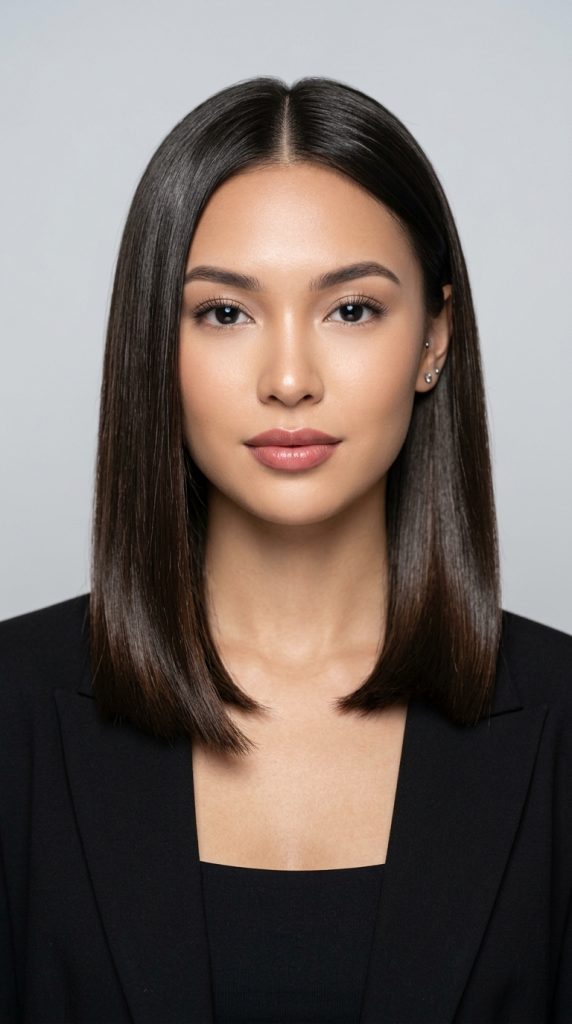
7. Sleek Straight Lob for a Polished, Fuller Look
Explanation (What it is)
The sleek straight lob is all about clean lines, smooth texture, and a polished finish. At first, it might seem like straight hair would make fine hair look flatter—but when combined with the right lob cut, it actually enhances the illusion of thickness.
This style works because it reflects light evenly across the surface of your hair, making it appear shinier and healthier. When your ends are well-maintained and cut evenly, straight styling emphasizes that fullness instead of exposing thinness.
If you’ve ever noticed how uneven or damaged ends can make your hair look thinner, this style fixes that by focusing on precision and smoothness. It’s a great option if you prefer a neat, professional look rather than something messy or textured.
This works best when your haircut is already well-shaped, especially with a blunt or slightly structured finish.
How to Implement (Practical Steps)
Start with a well-cut lob—preferably blunt or with minimal layers.
For styling:
- Apply a heat protectant and a lightweight smoothing serum
- Blow-dry your hair using a paddle brush for a straight base
- Use a flat iron in small sections for a sleek finish
- Keep the ends slightly curved inward for a softer look
- Finish with a shine spray (very light application)
If you have a small room… think of this like using mirrors and clean surfaces—it reflects light and makes everything look more refined and spacious. The sleek lob creates that same effect for your hair.
Best For (Who should use it)
- People with naturally straight or slightly wavy fine hair
- Those who prefer a clean, professional appearance
- Anyone who wants a low-frizz, controlled look
This works best when your hair is healthy and regularly trimmed.
Pro Tip (Expert Advice)
Use a flat iron with temperature control and avoid going over the same section multiple times. Fine hair is more prone to damage, and healthy hair always looks thicker than damaged hair.
Mistake to Avoid
Don’t overload your hair with oils or serums. Too much product can make fine hair look greasy and flat instead of sleek and full.
8. Choppy Lob for Added Texture and Movement
Explanation (What it is)
The choppy lob is a more edgy and modern take on the classic lob. It features uneven, piecey ends and subtle variations in length that create texture and movement throughout the hair.
For fine hair, this style can be very effective—but only when done correctly. The goal is to create the illusion of fullness through separation and texture, not by removing too much hair. The slightly “imperfect” finish makes your hair look thicker because it adds visual interest and dimension.
This works best when your hair tends to look flat and lifeless in more structured styles. The choppy effect breaks that flatness and gives your hair personality.

How to Implement (Practical Steps)
When getting this cut:
- Ask for a soft choppy lob with light texturizing at the ends
- Avoid aggressive thinning or razor cuts
- Keep the overall shape balanced and not too uneven
For styling:
- Apply a texturizing spray or light mousse
- Blow-dry using your fingers instead of a brush
- Use a flat iron to create slight bends in random sections
- Finish with a dry texture spray for definition
If you prefer a no-heat option, you can scrunch your hair with a lightweight styling product while it air-dries.
Best For (Who should use it)
- People who want a trendy, slightly edgy look
- Those with fine hair that lacks natural movement
- Anyone who prefers a messy, undone style
This works best when you don’t want your hair to look “too perfect.”
Pro Tip (Expert Advice)
Focus the choppiness mainly at the ends, not throughout the entire length. This keeps your hair looking full while still adding texture.
Mistake to Avoid
Don’t go overboard with choppiness. Too much uneven cutting can make fine hair look thin and frayed instead of textured.
9. Lob with Deep Side Part for Instant Volume
Explanation (What it is)
Sometimes, the biggest transformation doesn’t come from the haircut itself—but from how you style it. A lob with a deep side part is one of the easiest ways to instantly create volume, especially for fine hair.
By shifting your part dramatically to one side, you create lift at the roots and natural volume across the top of your head. This simple change can make your hair look fuller without needing additional layers or complex styling.
It also adds a bit of drama and elegance to your look, making even a simple lob feel more styled and intentional.
This works best when your hair tends to fall flat at the crown or looks too symmetrical and lifeless.

How to Implement (Practical Steps)
You don’t necessarily need a new haircut—just adjust your styling.
For best results:
- Start with slightly damp hair
- Apply a volumizing mousse at the roots
- Blow-dry your hair while directing it to one side
- Create a deep side part using a comb
- Lift the roots at the crown using a round brush or your fingers
- Lightly set with a flexible hold spray
If you want extra volume, you can tease the roots slightly at the crown.
Best For (Who should use it)
- People with flat roots or lack of crown volume
- Those who want a quick, no-cut solution
- Anyone who prefers a side-swept, elegant look
If you have a small room… this is like rearranging furniture instead of buying new pieces—it changes the entire feel without requiring a big investment.
Pro Tip (Expert Advice)
Switch your part occasionally. This prevents your hair from settling flat in one direction and keeps your roots naturally lifted over time.
Mistake to Avoid
Don’t use heavy hairspray to hold the part in place. It can make your hair stiff and unnatural, especially with fine strands.
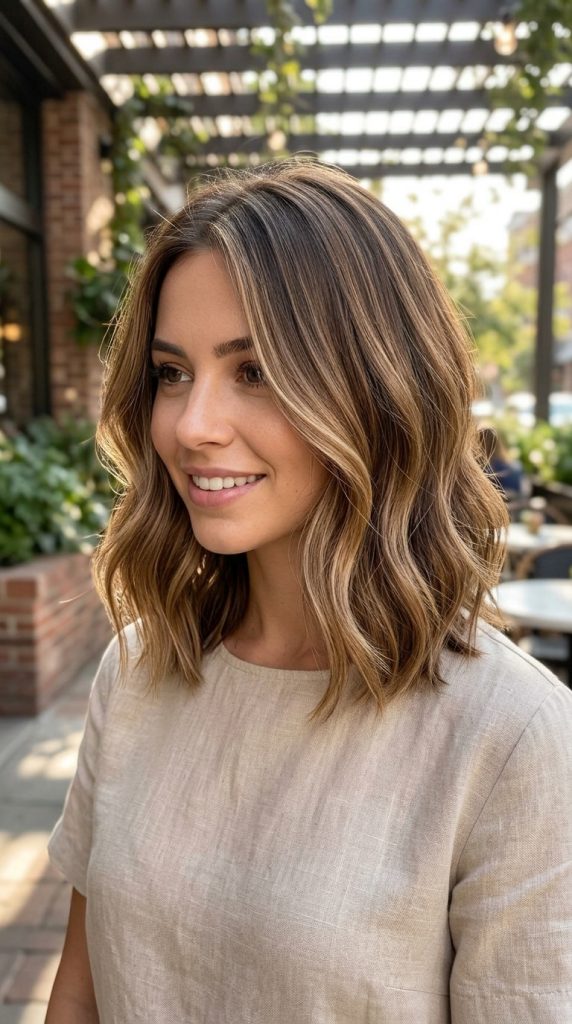
10. Layered Lob with Subtle Balayage for Dimension
Explanation (What it is)
This style combines a softly layered lob with subtle balayage highlights to create the illusion of depth and thickness. While the haircut itself adds light movement, the real magic comes from the color. Fine hair often looks flat because it lacks dimension—but adding soft, natural-looking highlights breaks up that flatness and makes your hair appear fuller.
Balayage works especially well because it’s hand-painted and blended, so it doesn’t create harsh lines. Instead, it gives your hair a sun-kissed, multi-dimensional effect. When light hits different tones in your hair, it creates shadows and highlights that visually “expand” your hair.
This works best when your hair is one solid color and tends to look dull or lifeless.
How to Implement (Practical Steps)
Start with a lightly layered lob—nothing too heavy, just enough to create movement.
For the color:
- Ask for soft balayage highlights, 1–2 shades lighter than your natural color
- Focus on mid-lengths and ends, not the roots
- Keep the transition natural and blended
For styling:
- Use loose waves to enhance the color dimension
- Apply a shine-enhancing spray to reflect light
- Avoid heavy oils that can flatten the effect
Maintenance tip:
- Use color-safe shampoo and occasional toning treatments to keep the color fresh
Best For (Who should use it)
- People with flat, single-tone hair color
- Those who want fullness without changing length drastically
- Anyone looking for a modern, Pinterest-style upgrade
This works best when you want your hair to look fuller without relying only on cutting techniques.
Pro Tip (Expert Advice)
Keep the highlights soft and minimal. With fine hair, less is more—too much contrast can actually make your hair look thinner instead of thicker.
Mistake to Avoid
Don’t go for very light or overly chunky highlights. Harsh color differences can make fine hair look dry and less dense.
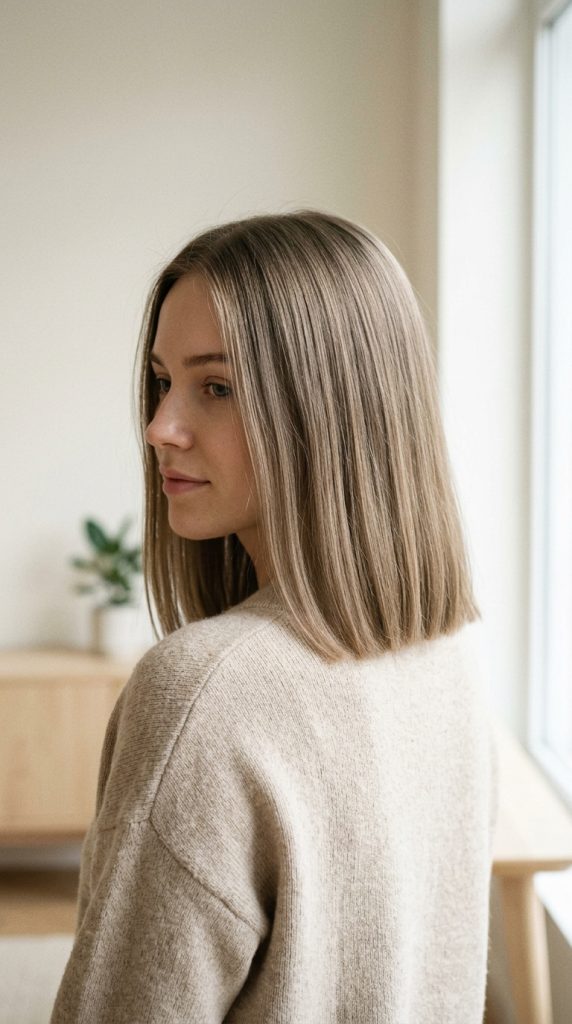
11. Minimalist One-Length Lob for Low-Maintenance Volume
Explanation (What it is)
The minimalist one-length lob is the simplest yet one of the most effective styles for fine hair. It’s a clean, no-layer haircut where all the hair falls at the same length, creating a naturally full and balanced look.
This style proves that sometimes less really is more. Instead of relying on layers, texture, or heavy styling, it focuses on maintaining density and structure. Fine hair benefits greatly from this because every strand contributes to the overall fullness.
If you’re tired of complicated styles that require constant effort, this is a refreshing option. It’s easy to manage, easy to style, and consistently looks neat.
This works best when your hair struggles with thinning ends or when layered cuts haven’t worked well for you in the past.
How to Implement (Practical Steps)
When getting this cut:
- Ask for a one-length lob with no layers
- Keep the length around the shoulders or slightly above
- Ensure the ends are cut clean and even
For styling:
- Blow-dry using a paddle brush for a smooth finish
- Add slight bends at the ends for softness if desired
- Use a lightweight volumizing spray at the roots
- Keep products minimal to avoid weighing hair down
If you prefer air-drying, simply part your hair and let it dry naturally—it will still look structured because of the cut.
Best For (Who should use it)
- People who want a low-maintenance hairstyle
- Those with very fine or fragile hair
- Anyone who prefers a clean, simple look
If you have a small room… this is like keeping the design minimal—no clutter, just clean lines that make everything feel more open and balanced.
Pro Tip (Expert Advice)
Regular trims are essential. Even small split ends can make a one-length lob look thin, so maintaining sharp ends keeps the fullness intact.
Mistake to Avoid
Don’t skip trims or let the ends become uneven. This style relies heavily on precision—once the shape is lost, the fullness disappears quickly.