15 Braids Hacks For Kids Boys
Finding the perfect hairstyle for boys can honestly feel harder than most parents expect. One week your child wants a trendy braided look they saw at school, and the next week they suddenly refuse to sit still long enough to finish the style. Add busy mornings, sports practice, school dress codes, and sensitive scalps into the mix, and it becomes clear why so many parents are constantly searching for easy braid hacks that actually work for kids boys.
Braided hairstyles for boys are no longer just a quick grooming solution. Today, braids are part of modern kids fashion, self-expression, and practical hair care. Parents love them because they help keep hair neat, manageable, and protected throughout the week. Kids love them because they look cool, stylish, and different from basic everyday cuts. Whether your child has curly hair, coily textures, long hair, or medium-length hair, there is a braid style that can completely transform their look while also making your daily routine easier.

One of the biggest reasons braided hairstyles have become so popular for boys is because they save time. If you have ever struggled through chaotic school mornings trying to detangle hair while your child complains, moves around, or gets distracted every five seconds, you already know how stressful hair routines can become. Braids reduce that stress dramatically. A well-done braided style can last several days or even a week with proper care, meaning fewer battles before school and less daily styling pressure.
Another important reason parents are turning toward braid hacks is hair protection. Kids are active. They run, sweat, jump, play sports, wrestle with siblings, and somehow manage to destroy even the neatest hairstyle within hours. Braids help keep the hair secure and protected from constant friction, dryness, and tangling. This works especially well for textured hair types that need moisture retention and low-manipulation styling.
But here is something many Pinterest articles fail to explain properly: not every braid style works for every child. Some styles look amazing online but are uncomfortable for active kids. Others take too long to maintain or require products that may irritate sensitive scalps. That is why understanding practical braid hacks matters more than simply copying trendy photos from social media.
The truth is, successful braided hairstyles for boys are all about smart techniques, comfort, maintenance, and choosing styles that fit your child’s actual lifestyle. For example, if your son plays football or basketball several times a week, super detailed tiny braids may not hold up well unless you use the right preparation methods. On the other hand, if you have a younger child with a short attention span, simple braid patterns with quick parting tricks can make the entire styling process easier for both of you.
Another thing parents often overlook is scalp health. Tight braids might look clean and polished at first, but they can cause headaches, discomfort, and even hair breakage if done incorrectly. Many kids silently tolerate painful hairstyles because they think that is normal. The best braid hacks focus on keeping styles neat without putting too much tension on the scalp. Comfort should always come first, especially for younger children whose hairlines are still delicate.
This article is designed to help parents, caregivers, and even beginner braiders discover realistic braid solutions for boys that work in everyday life. Instead of only showing trendy hairstyle ideas, we are focusing on practical braid hacks that make styling faster, cleaner, longer-lasting, and more kid-friendly. These are the small details that actually make a huge difference once you try them at home.
You will learn how to make braid styles last longer, how to reduce frizz, how to keep kids comfortable during styling sessions, and how to choose braid patterns that fit different hair lengths and textures. You will also discover time-saving tricks that professional braiders often use but most parents never hear about.
If you have a small child who hates sitting for hairstyles, there are hacks in this guide specifically for shorter attention spans. If your child has thick curly hair that tangles easily, you will learn protective methods that reduce breakage and simplify detangling. If you are trying to create cleaner-looking parts or more polished braid styles at home, you will find beginner-friendly techniques that instantly improve the final result.
Braids are also becoming an important part of confidence and identity for many boys today. Kids notice hairstyles. They compliment each other, compare styles, and often feel proud when they have a fresh haircut or clean braid design. A hairstyle may seem like a small thing to adults, but for children it can affect confidence, comfort, and self-expression more than we realize.
Another reason these braid hacks matter is affordability. Constant barber visits and professional braid appointments can become expensive quickly, especially for growing kids who need regular touch-ups. Learning a few smart braid techniques at home can save a huge amount of money over time. Even simple improvements like better sectioning, proper moisturizing, or nighttime protection can extend the life of a hairstyle and reduce how often you need professional help.
This works best when parents focus on consistency rather than perfection. You do not need salon-level skills to create clean, stylish braids for boys. Small improvements in technique often create the biggest results. Many experienced parents start with very basic braid styles and slowly build confidence over time. The key is learning practical methods that fit into real family routines instead of chasing unrealistic social media perfection.
One of the most helpful things about braid hacks is that they adapt easily to different situations. Some styles are ideal for school weeks, while others work better for vacations, birthdays, sports tournaments, or family events. Once you understand the basics of braid preparation and maintenance, you can customize styles based on your child’s needs without starting from scratch every time.
You will also notice that many of these hacks improve overall hair health. Healthy hair is easier to braid, easier to maintain, and less prone to breakage. Good braid routines encourage moisturizing, gentle handling, and scalp care habits that benefit kids long-term. That means braid styling is not just about appearance. It can also support healthier hair growth and better hair management overall.
Parents often assume complicated hairstyles require professional expertise, but that is not always true. In reality, many polished braid looks come down to simple preparation tricks, sectioning methods, and maintenance habits that anyone can learn with practice. Even beginner-friendly braid hacks can create cleaner, more stylish results than people expect.
Throughout this guide, you will discover practical solutions that work for real families, real schedules, and real kids. These are not unrealistic beauty trends designed only for photos. These are braid hacks meant to simplify life while helping boys look stylish, feel comfortable, and maintain healthy hair at the same time.
Whether you are completely new to braiding or already have experience styling kids’ hair, these braid hacks will help you work smarter, reduce stress, and create styles that actually last. And most importantly, they will help you turn hairstyle time into something more manageable, enjoyable, and confidence-boosting for both you and your child.
1. Pre-Parting Trick for Faster Morning Braiding (Invisible Time-Saver Hack)
One of the biggest struggles parents face when braiding boys’ hair is not the braiding itself—it’s the sectioning. If you have ever tried to part a child’s hair while they are half asleep, moving around, or asking for breakfast at the same time, you already know how quickly the process becomes stressful. This is where the pre-parting trick becomes a game changer.
The idea is simple: instead of doing everything on the same morning, you prepare the hair the night before or during a calm moment. You lightly detangle the hair, moisturize it, and create the sections using a rat-tail comb or your fingers. Then you loosely twist or band each section so it stays in place overnight.

This method works especially well for kids who struggle to sit still. If you have a small room or limited time in the morning, pre-parting reduces styling time by almost half. When morning comes, you are not fighting with the comb anymore—you are simply braiding already-prepared sections.
How to implement it
Start with slightly damp or moisturized hair. Apply a leave-in conditioner or light oil to reduce friction. Then divide the hair into the braid pattern you want—straight backs, box parts, or curved sections depending on the final style. Secure each section with soft bands or twist them gently so they don’t mix overnight. In the morning, just undo one section at a time and braid immediately.
Best for
This works best for school mornings, busy parents, and kids with thick or curly hair that tangles easily. It is also ideal for toddlers who cannot stay still for long grooming sessions.
Pro tip
If you want cleaner parts, use a little edge control or water-based gel before sectioning. It helps the parts stay visible and sharp even after sleeping.
Mistake to avoid
Do not make the sections too tight at night. Tight parting can cause discomfort and even small tension on the scalp while sleeping. The goal is preparation, not tension.
2. Moisture Lock Braiding Method (Stops Frizz & Keeps Braids Fresh Longer)
A common problem with kids’ braids is that they start looking frizzy just a day or two after styling. This usually happens because the hair was not properly moisturized before braiding. Dry hair naturally expands, breaks out of the braid pattern, and loses its neat appearance quickly.
The moisture lock braiding method focuses on preparing the hair in a way that keeps hydration sealed inside each braid. Instead of just spraying water and braiding immediately, you layer moisture in a specific order that helps the style last longer and look fresher.

How to implement it
Start with clean or slightly damp hair. First apply a water-based leave-in conditioner. Then add a lightweight cream or moisturizer. Finally, seal everything with a small amount of natural oil like coconut or jojoba oil. This layering technique ensures that moisture stays inside the hair shaft instead of evaporating quickly.
After that, braid the hair normally but keep tension consistent—not too tight, not too loose. Once finished, you can lightly apply oil to the finished braids to smooth flyaways.
Best for
This method is perfect for boys with curly, coily, or dry hair types that lose moisture quickly. It is also great for active kids who sweat during sports or outdoor play.
Pro tip
If your child has very dry hair, add a steam towel wrap for 2–3 minutes before braiding. This opens the hair cuticle and allows better moisture absorption.
Mistake to avoid
Do not overload the hair with heavy products. Too much cream or oil can make braids greasy and attract dust, making the hairstyle look messy instead of clean.
3. Kid-Friendly Pain-Free Tension Control Technique (Comfort First Braiding)
Many parents unknowingly braid too tightly because they want the style to last longer or look extra neat. However, this often leads to discomfort, headaches, and even hairline stress in kids. The pain-free tension control technique is a simple but powerful hack that balances durability with comfort.
Instead of pulling the hair tightly from the roots, you focus on maintaining consistent, medium tension throughout the braid. The braid should feel secure but never painful. A good test is to gently ask your child during styling if it feels “okay” or “too tight.” If they hesitate, it’s already too much tension.

How to implement it
Start braiding with a soft grip at the root. As you continue, maintain steady hand pressure but avoid pulling downward sharply. Keep your fingers relaxed and guide the hair instead of forcing it. For younger kids, use slightly larger sections so the braid forms easily without needing tight pulling.
You can also alternate between tight and loose grip sections within the braid to distribute tension evenly. This makes the style last while keeping the scalp comfortable.
Best for
This is ideal for toddlers, younger school kids, or any child with a sensitive scalp. It is also great for first-time braid styles when kids are not used to sitting for long grooming sessions.
Pro tip
If your child moves a lot, try braiding while they are watching a show or slightly distracted. Less movement means you don’t need to tighten excessively to “hold” the braid in place.
Mistake to avoid
Never assume that tighter equals better. Over-tight braiding can damage edges over time and make kids dislike future hairstyling sessions. Comfort always leads to better long-term results.
4. Nighttime Satin Protection Routine (The Secret to Braids That Last Twice as Long)
One of the most overlooked reasons kids’ braids start looking messy after just a couple of days is what happens at night. No matter how neatly the style is done in the morning, cotton pillowcases and restless sleep can slowly destroy the structure of the braids. Friction causes frizz, dryness, and unraveling at the roots. This is why a proper nighttime protection routine is not optional—it is essential if you want braids to last longer and stay fresh.
The satin protection routine is a simple but powerful habit that preserves braid quality while your child sleeps. Satin and silk materials reduce friction, meaning the hair slides instead of rubbing against rough surfaces. This helps maintain moisture, keeps edges neat, and prevents the braids from becoming puffy or dry overnight.

How to implement it
Start by gently gathering the braids before bed. You can loosely tie them into a low ponytail or let them hang naturally depending on the style. Then cover the hair with a satin bonnet or silk durag designed for kids. If your child refuses to wear a bonnet, a satin pillowcase is the next best option.
For extra protection, lightly apply a small amount of leave-in conditioner or hair oil before covering the hair. This helps lock in moisture overnight without making the braids heavy or greasy.
Best for
This method is perfect for school-going kids, active boys who sweat during the day, and hairstyles that are meant to last more than 3–5 days. It is also ideal for curly or coily hair types that dry out quickly.
Pro tip
If your child keeps removing the bonnet during sleep, choose a satin-lined hoodie or adjustable strap bonnet. Kids are more likely to keep it on when it feels comfortable and secure rather than tight or restrictive.
Mistake to avoid
Do not use regular cotton scarves or rough fabric covers. These materials absorb moisture and create friction, which defeats the purpose of protecting the braids. Consistency matters more than perfection here—even using satin only 4–5 nights a week can significantly improve results.
5. Smart Section Sizing Hack Based on Hair Density & Activity Level
Many parents struggle with braids that either look too bulky, unravel too quickly, or take too long to complete. The problem is usually not the braiding technique itself—it’s the section size. Most people use the same size sections for every child, but in reality, braid sections should change depending on hair density and how active the child is.
The smart section sizing hack helps you choose the right balance between neatness, durability, and comfort. This technique is what separates beginner braid jobs from more professional-looking results.

How to implement it
Start by observing your child’s hair type. If the hair is thick and dense, use medium to large sections. This prevents overcrowding and reduces styling time. If the hair is fine or soft, smaller sections work better because they give the braid more structure and hold.
Next, consider activity level. If your child plays sports or runs a lot during the day, slightly tighter and medium-sized sections will hold better without needing daily touch-ups. If your child is younger and less active, softer and slightly larger sections are more comfortable and easier to maintain.
When parting the hair, always aim for balance. Sections should be even, but not identical across every braid style. Adjust based on how the hair naturally falls instead of forcing perfect symmetry.
Best for
This method is ideal for parents who want consistent results without spending extra time fixing loose braids. It also works well for kids with mixed hair textures or uneven growth patterns.
Pro tip
Use your child’s head shape as a guide. Wider heads often suit slightly larger braids, while narrower heads look cleaner with tighter, more compact sections. This small adjustment instantly improves the overall look.
Mistake to avoid
Do not copy section sizes from online photos without adjustment. What works for one child may not work for another. Incorrect section sizing is one of the main reasons braids look either too tight, too loose, or uneven after a few days.
6. 5-Minute Pain-Free Detangling Method (No Tears, No Stress Routine)
Detangling is often the most dreaded part of any kids’ hair routine, especially for boys who are impatient or sensitive to pulling. If detangling is done incorrectly, it can lead to discomfort, resistance, and even long-term fear of hairstyling. The 5-minute pain-free detangling method is designed to make this process faster, easier, and much more child-friendly.
Instead of forcing a comb through dry or tangled hair, this method focuses on softening and separating knots gradually, which makes the entire process smoother and almost painless.

How to implement it
Start by lightly misting the hair with water or a detangling spray. The goal is to soften the strands, not soak them. Then apply a leave-in conditioner or detangling cream to add slip and reduce friction.
Next, divide the hair into 4–6 small sections depending on thickness. Work on one section at a time instead of trying to detangle everything at once. Use your fingers first to gently separate large knots before introducing a wide-tooth comb.
Always start detangling from the ends of the hair and slowly work your way up to the roots. This prevents pulling and reduces breakage significantly. Keep the process calm and slow—rushing only increases pain and frustration.
Best for
This method is ideal for kids with curly, coily, or thick hair that tangles easily. It is also perfect for mornings before braiding or after removing old hairstyles.
Pro tip
Turn detangling into a distraction activity. Let your child watch a short video, play a simple game, or hold a toy while you work. When their attention is elsewhere, they naturally resist less, making the process much smoother.
Mistake to avoid
Never detangle completely dry hair or force a comb through large knots. This is the main cause of breakage and discomfort. Patience and sectioning are more effective than pressure or speed.
7. Cornrow Direction Mapping Hack (Cleaner Patterns with Zero Confusion)
One of the main reasons kids’ braids look uneven or messy at home is not the braiding itself—it’s the direction of the cornrows. When sections are randomly started without a clear direction plan, the final style can look crooked, unbalanced, or difficult to maintain. The cornrow direction mapping hack solves this by giving you a simple “roadmap” before you even touch the hair.
Instead of starting braids wherever your hands naturally go, you first decide the flow pattern: straight back, curved, zig-zag, or side-swept. This creates structure, especially for boys who prefer neat, athletic-looking styles that stay in place during sports and school activities.

How to implement it
Start by imagining the scalp as a grid. Decide the direction before parting—this is the key step most beginners skip. For straight-back cornrows, divide the hair into vertical sections starting from the forehead to the nape. For curved designs, gently follow the natural head shape rather than forcing straight lines.
Use a rat-tail comb to lightly sketch the pattern before committing to it. Think of it like drawing a map. Once the pattern is visible, begin braiding one section at a time, always following the direction you planned.
Best for
This works best for school-ready hairstyles, sports hairstyles, and kids who want a clean, structured look. It’s especially helpful for medium to long hair where pattern visibility matters more.
Pro tip
If you are a beginner, stick to straight-back cornrows first. Once you gain confidence, gradually move to curved or creative patterns. Complexity should increase with experience, not on the first try.
Mistake to avoid
Do not start braiding without a direction plan. Random sectioning is the main reason home braids look uneven even when the braiding technique is correct.
8. Anti-Frizz Edge Control Timing Hack (When to Apply for Perfect Finish)
Many people use edge control incorrectly during braiding, which leads to buildup, flaking, or stiff-looking hairlines. The anti-frizz timing hack focuses not just on what product you use, but when you apply it. This small change can dramatically improve the final appearance of kids’ braids.
Instead of applying edge control randomly throughout the process, timing it correctly ensures smoother edges, cleaner parts, and longer-lasting neatness without product overload.

How to implement it
Start the braiding process with clean, lightly moisturized hair. Avoid applying edge control at the beginning. Instead, wait until after sectioning is complete.
Apply a small amount of edge control only on the parts and hairline before you begin each braid section. This helps create sharp, defined lines without making the entire scalp sticky. Once braiding is finished, you can lightly smooth the edges again if needed, but only in small amounts.
For kids with sensitive scalps, choose water-based, non-heavy products to avoid buildup.
Best for
This hack is perfect for polished school styles, photo days, events, or any hairstyle where clean edges matter. It also works well for kids with flyaway-prone or fine baby hairs.
Pro tip
Use a soft toothbrush or small edge brush instead of fingers. It distributes product evenly and prevents clumps or greasy patches along the hairline.
Mistake to avoid
Do not overload the hairline with product at the start. Too much edge control early in the process leads to stiffness, flaking, and an unnatural finish that becomes worse as the days go on.
9. Braid Refresh Spray Hack (Revives Old Braids in 60 Seconds)
Even the best braids start looking tired after a few days—especially for active kids. Instead of removing and redoing the style, you can refresh it quickly using a simple braid refresh spray hack that brings life back to dull, frizzy braids in under a minute.
This technique is especially useful for school weeks when there is no time for full restyling but you still want the hair to look neat and presentable.

How to implement it
Create a simple spray mix using water, a small amount of leave-in conditioner, and a drop of lightweight oil. Shake well and lightly mist over the braids—do not soak them.
After spraying, gently smooth the braids with your hands, moving downward along the braid pattern. This helps realign frizz and restore definition. If needed, lightly reapply edge control to the hairline for a sharper finish.
Let the hair air dry naturally or use a cool setting blow-dry for faster results.
Best for
This is ideal for mid-week maintenance, school mornings when time is limited, and kids who have sports or outdoor activities that cause frizz.
Pro tip
Keep the spray bottle in a cool place and use distilled water if possible. It helps the spray stay fresh longer and prevents buildup on the scalp.
Mistake to avoid
Do not overspray the hair. Too much moisture can loosen braids and reduce their lifespan instead of refreshing them.
10. Protective Root Grip Technique (Prevents Early Braid Slippage)
One common frustration with kids’ braids is when they start slipping or loosening near the roots after just a couple of days. This usually happens because the root area was not properly secured during the first few stitches of the braid. The protective root grip technique solves this by reinforcing the base without making it painful or too tight.
This method focuses on stability at the scalp level while keeping the rest of the braid soft and comfortable.

How to implement it
When starting each braid, hold the root section firmly but gently. Begin the first two or three stitches slightly tighter than the rest of the braid—this creates a secure anchor point. After that, reduce tension and continue braiding normally.
Another useful trick is to slightly overlap the first strands in a crisscross pattern. This helps the braid “lock” into place without needing excessive pulling.
For very soft or slippery hair textures, you can lightly dampen the root section or use a small amount of styling gel before starting the braid.
Best for
This hack works best for kids with silky, fine, or freshly washed hair that tends to slip out of braids easily. It is also useful for active children who move a lot during the day.
Pro tip
Combine this technique with proper section sizing for even better results. A secure root + correct section size = long-lasting braids that don’t need daily fixing.
Mistake to avoid
Do not tighten the entire braid from root to tip. Only the root area needs reinforcement—over-tightening the full braid can cause discomfort and scalp stress over time.
11. “Stretch Before Braiding” Hack (Reduces Shrinkage & Makes Braids Neater)
A major challenge with kids’ braided hairstyles—especially for boys with curly or coily hair—is shrinkage. You finish a clean braid style in the morning, and by the afternoon it already looks shorter, tighter, and less defined. This is not because the braids are done poorly, but because the hair wasn’t stretched properly before styling.
The stretch-before-braiding hack helps lengthen the hair slightly, making sections easier to grip and creating a smoother, more polished braid finish that lasts longer throughout the week.

How to implement it
Start with damp, moisturized hair. Divide it into medium sections depending on thickness. Then stretch each section using one of these methods:
- Banding method: Place soft bands along the length of each section to gently stretch it overnight
- Blow-dry stretch (cool setting): Use a blow-dryer on low or cool air while pulling the hair downward
- Twist stretch: Two-strand twist each section and let it sit for 20–30 minutes before braiding
Once the hair is stretched, begin braiding normally. You will notice that sections are easier to manage and braids look more uniform.
Best for
This works best for boys with tight curls, shrinkage-prone textures, or medium-to-long hair where length definition matters. It is also great before school weeks or events where neatness is important.
Pro tip
If you are short on time, even a quick 10-minute banding session can make a noticeable difference in braid smoothness.
Mistake to avoid
Do not over-stretch the hair. Excessive pulling or heat can weaken strands. The goal is light elongation, not straightening.
12. Quick Clean Parting Gel Trick (Sharp Lines Without Salon Tools)
One thing that instantly upgrades kids’ braids from “home done” to “professional looking” is clean parting. Uneven or fuzzy parts can make even good braiding look messy. The quick clean parting gel trick helps create sharp, visible sections without needing expensive tools or heavy products.
This hack focuses on control and precision at the scalp level, especially useful when working with active or impatient kids.

How to implement it
Start by applying a small amount of water-based gel or lightweight styling cream along the line where you plan to part the hair. Do not overuse product—just a thin layer is enough.
Then use a rat-tail comb to draw the part slowly and firmly through the gelled area. The product helps the comb glide smoothly while keeping short hairs in place.
Once the part is created, press it gently with your finger or comb handle to set the line before starting the braid.
Best for
This works best for school styles, photoshoots, special occasions, or any braid design where neat structure matters. It is especially helpful for thick or curly hair that tends to resist clean parting.
Pro tip
Dip the comb lightly in water before parting for extra smooth movement. This reduces pulling and keeps the scalp comfortable for kids.
Mistake to avoid
Do not use heavy gels or waxes. They can cause buildup and make hair stiff, which affects both comfort and long-term hair health.
13. “Two-Session Braiding Method” (Stress-Free Styling for Restless Kids)
Trying to complete full braided hairstyles in one sitting is often the reason kids become impatient, frustrated, or uncooperative. The two-session braiding method solves this by breaking the process into manageable stages that reduce stress for both parent and child.
Instead of rushing everything at once, you separate preparation and braiding into two calm sessions.

How to implement it
Session 1 (Preparation – 10 to 20 minutes):
Detangle the hair, moisturize it, and pre-part the sections. Secure each section loosely so it stays organized.
Session 2 (Braiding – later or next morning):
Focus only on braiding already-prepared sections. This makes the process faster and smoother because the hardest work is already done.
You can even split sessions between evening and morning depending on your schedule.
Best for
This is ideal for younger boys, toddlers, or kids with low patience for long grooming routines. It also works well for busy school mornings or families with tight schedules.
Pro tip
Turn Session 1 into a relaxed routine after bath time when the child is calm. This creates less resistance during braiding later.
Mistake to avoid
Do not skip preparation thinking it will save time. Without proper sectioning, the second session becomes longer and more stressful.
14. Scalp Comfort Cooling Hack (Prevents Itching & Irritation)
After braiding, some kids experience scalp tightness, itching, or discomfort—especially if they are sensitive or active. This often leads to them scratching the scalp, which ruins the braid style early. The scalp comfort cooling hack helps reduce irritation and keeps braids wearable for longer.
This method focuses on calming the scalp immediately after styling.
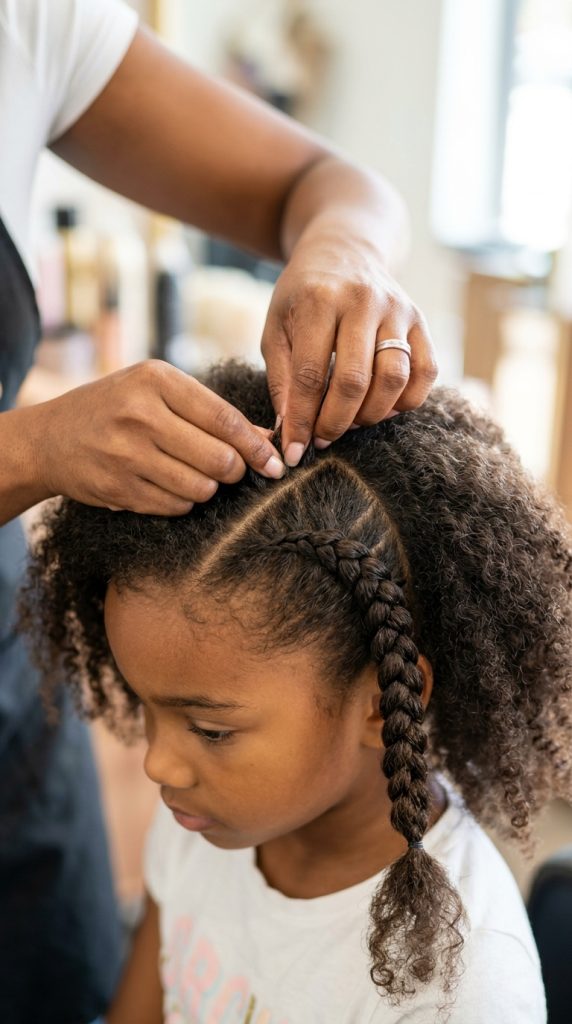
How to implement it
After finishing braids, lightly mist the scalp with a mixture of water and a small amount of aloe vera juice or soothing leave-in spray. Avoid heavy oils right after braiding.
Gently massage the scalp using fingertips in circular motions. This improves blood circulation and reduces tightness.
If the child feels extra sensitivity, you can also use a cool (not cold) damp cloth and gently press it against the scalp for a few seconds.
Best for
This hack works best for kids with sensitive skin, first-time braided styles, or tight-looking protective styles that need calming afterward.
Pro tip
Aloe vera gel diluted with water works better than heavy oils for soothing because it absorbs quickly without buildup.
Mistake to avoid
Do not apply strong oils or alcohol-based products immediately after braiding. These can worsen irritation instead of calming it.
15. “Weekend Reset & Re-Braid Strategy” (Keeps Hair Healthy Long-Term)
One of the biggest mistakes parents make is leaving braids in for too long without proper maintenance or resets. While braids are protective, they still need periodic care to prevent buildup, tension stress, and scalp issues. The weekend reset & re-braid strategy ensures the hairstyle stays healthy, fresh, and comfortable long-term.
Instead of waiting until the style completely breaks down, you plan small maintenance resets.

How to implement it
Every weekend (or every 5–7 days), gently remove the braids section by section. Detangle lightly using a moisturizing spray or conditioner mix.
Wash or rinse the scalp if needed, focusing on product buildup around the roots. After drying, moisturize the hair again and redo only the front or most visible sections if full re-braiding is not needed.
This partial refresh keeps the style looking new without full rework every time.
Best for
This is perfect for school-going kids, active boys, and protective styles meant to last more than one week. It also helps maintain scalp health over time.
Pro tip
Focus on “high-visibility areas” like the front hairline or crown when refreshing. This saves time while keeping the style looking fresh.
Mistake to avoid
Do not keep braids in for too long without any reset. Even protective styles need breaks to avoid buildup and tension damage.