9 Curly Hair Frizz Control Tips That Actually Work
Frizz is one of the most common curly hair problems, yet it’s also one of the most misunderstood. Many people think frizz simply means “bad hair,” but that is not true at all. Frizz is usually your hair reacting to dryness, humidity, damage, lack of moisture balance, rough handling, or incorrect products.
In reality, curly hair naturally tends to be drier than straight hair.
The shape of curly strands makes it harder for natural scalp oils to travel evenly from roots to ends. Because of this, curls often lose moisture faster and become more vulnerable to dryness, rough texture, and frizz.

That’s why curly hair needs a completely different approach compared to straight hair care.
One of the biggest mistakes people make is fighting frizz aggressively instead of understanding what causes it. Heavy brushing, harsh shampoos, excessive heat, rough towels, and drying alcohol-based products can actually make frizz worse over time.
Modern curly hair routines now focus much more on moisture, protection, softness, and curl health instead of trying to force curls into unnatural smoothness.
This is exactly why healthy curls usually look better than overly controlled curls.
Soft natural texture with slight airy movement often looks far more beautiful and modern than stiff crunchy curls overloaded with product.
Another reason frizz control became such a huge beauty topic is because curly hair trends have changed dramatically over the past few years. Instead of constantly straightening textured hair, more people are now embracing natural curls, waves, and coils.
Pinterest, TikTok, and beauty creators have helped normalize healthy textured hair routines that focus on enhancing curls instead of hiding them.
This shift has made curl care education much more important.
Because honestly, curly hair usually looks its best when you work with the texture instead of against it.
Another important thing to understand is that not all frizz is bad. Some soft halo frizz can actually make curly hairstyles look fuller, softer, and more natural. Completely eliminating every tiny flyaway is not always realistic—or even necessary.
The real goal is healthy manageable curls with controlled softness and definition.
This works best when the curls still feel touchable and natural rather than overly stiff from too much product.
Humidity also plays a huge role in curly hair frizz. Curly hair absorbs moisture from the air more easily, especially when the hair cuticle is dry or damaged. That’s why curls often expand or become puffier during humid weather.
The solution is usually not stronger hairspray or excessive gel. Instead, healthier moisture balance and protective styling techniques often create much better long-term results.
Another major factor behind frizz is hair damage. Frequent heat styling, bleaching, chemical treatments, and rough handling can weaken the curl structure over time. Damaged curls usually struggle to hold definition because the cuticle becomes rough and uneven.
This is why healthier curls naturally appear shinier and less frizzy.
Your nighttime routine matters too. Many people spend time styling their curls perfectly during the day but accidentally ruin them overnight through friction and dryness. Cotton pillowcases, rough tossing during sleep, and unsecured curls can all increase frizz significantly.
Small changes like satin pillowcases or protective hairstyles can make a surprisingly huge difference.
Product layering is another important part of frizz control. Curly hair usually needs moisture plus hold. Moisture keeps curls soft and hydrated, while hold products help maintain curl definition and reduce puffiness.
But balance matters.
Too little product can leave curls dry and undefined, while too much product can create buildup, heaviness, or crunchy texture.
This works especially well when products are applied to soaking wet or very damp hair so moisture gets sealed into the curls more effectively.
Another important thing people forget is patience. Healthy curls often improve gradually over time with consistent routines. One deep-conditioning session usually will not completely transform damaged curls overnight.
But consistent moisture, gentle handling, and protective habits can dramatically improve curl health over several weeks and months.
Haircuts also matter more than people realize. Heavy damaged ends can make curls look puffier and less defined. Curly hair usually responds beautifully to layered cuts that remove excess weight while helping the curls form more naturally.
Another reason modern curl routines feel healthier is because they focus on softness rather than perfection. Real curls move differently every day depending on weather, products, sleep, and moisture levels.
And honestly, that’s completely normal.
The goal is not robotic perfect curls every single day.
The goal is healthier, shinier, softer curls that feel manageable and beautiful in real life.
The tips in this guide focus on realistic curly hair frizz solutions that genuinely help instead of relying on overly complicated routines. These are practical habits, product techniques, styling methods, and hair care changes that support healthier curls long term.
You’ll learn how to reduce dryness, protect curl definition, improve moisture balance, minimize humidity frizz, and create softer healthier-looking curls without making your routine overwhelming.
Most importantly, these tips will help you understand that frizz control is not about fighting your curls. It’s about supporting them properly so they can naturally look smoother, shinier, and more defined while still keeping their beautiful texture.
1. Stop Drying Your Hair With Regular Towels
One of the biggest hidden causes of curly hair frizz is something many people never think about: regular bath towels. Traditional cotton towels may seem harmless, but for curly hair, they can create major friction that disrupts curl patterns, roughens the hair cuticle, and increases frizz almost immediately after washing.
Curly hair is naturally more delicate because the twists and bends in each strand make it harder for natural oils to travel evenly from root to tip. This means curls are already more vulnerable to dryness and rough texture compared to straight hair. When rough towel fibers aggressively rub against wet curls, the hair cuticle lifts even more, causing puffiness, tangles, and undefined texture.
This is one reason many people notice their curls look frizzier right after drying—even before styling products are applied.
Wet hair is also much more fragile than dry hair. Aggressive towel drying can weaken curl structure, increase breakage, and create split ends over time. The more damaged the hair becomes, the harder it is for curls to hold definition and moisture properly.
This works best when curls are treated gently during every stage of the routine, especially immediately after washing.
Another reason regular towels create problems is because most people dry curly hair incorrectly without realizing it. Rubbing the towel back and forth quickly may remove water faster, but it also separates curl clumps and creates rough texture before the hair even begins drying naturally.
That’s why many curl specialists recommend replacing rough towels with microfiber towels or soft cotton T-shirts instead.
Microfiber materials absorb excess water more gently without creating as much friction. Cotton T-shirts also help preserve curl clumps because the smoother fabric disturbs the hair less while drying.
This simple change alone can noticeably improve curl softness and reduce frizz over time.
Another huge advantage of gentler drying methods is better product absorption. When curls remain more organized and hydrated after washing, leave-in conditioners and styling creams usually work much more effectively.
The overall curl pattern also appears shinier because smoother cuticles reflect light better than rough frizzy strands.

How To Dry Curly Hair Properly
After washing, avoid rubbing the hair aggressively.
Use a microfiber towel or soft cotton T-shirt.
Gently squeeze excess water downward.
Use a “plopping” method if desired by wrapping curls softly.
Allow curls to remain clumped together naturally.
Apply styling products while the hair is still damp.
Best For
- Frizzy curly hair
- Dry damaged curls
- Wavy, curly, or coily textures
- Fine curls needing definition
- Reducing breakage
- Healthier curl routines
Pro Tip
Dark-colored cotton T-shirts usually work especially well because the fabric is softer and smoother than rough bath towels.
Mistake To Avoid
Avoid rubbing curls aggressively while drying. This separates curl patterns and instantly creates frizz.
Another mistake is leaving thick towels wrapped tightly around the hair for too long, which can flatten curls and increase tangling.
2. Apply Products On Soaking Wet Hair
One of the most effective curly hair frizz control techniques is applying products while the hair is still soaking wet or very damp. This simple habit can dramatically improve curl definition, moisture retention, softness, and overall frizz reduction.
One reason this works so well is because water helps distribute products evenly throughout curly hair. When curls are soaking wet, styling creams, leave-ins, and gels spread more smoothly and coat the strands more consistently.
This helps curls stay hydrated longer while reducing puffiness and dryness during the drying process.
Another major reason soaking wet application reduces frizz is because it helps preserve curl clumps. Curly hair naturally forms grouped sections when wet. These clumps create smoother more defined curls once dry.
But when products are applied too late—after the hair has already started drying—the curl pattern often becomes separated and fluffy instead of smooth and defined.
This works best when products are layered immediately after washing before the hair begins air drying.
Another huge advantage is moisture sealing. Curly hair needs hydration constantly because it loses moisture faster than straight hair. Applying products to wet hair helps trap water inside the strands instead of allowing it to evaporate quickly.
This creates softer shinier curls with better elasticity and less frizz.
The method also improves curl hold. Gels and mousses usually form better definition when applied during the wet stage because the curls dry directly into their natural pattern.
Another reason this technique became so popular in curly hair routines is because it reduces unnecessary manipulation. Constantly touching, brushing, or styling semi-dry curls often increases frizz significantly.
Instead, applying products once on wet hair allows the curls to dry more smoothly with less disturbance.
How To Apply Products Properly
Wash and condition the hair thoroughly.
Keep the hair soaking wet after rinsing.
Apply leave-in conditioner first.
Follow with curl cream or mousse.
Apply gel lightly for hold if desired.

Scrunch upward gently.
Allow curls to air dry or diffuse carefully.
Best For
- Dry frizzy curls
- Wavy and curly hair
- Defining curl clumps
- Humid climates
- Long-lasting curl routines
- Softer shinier texture
Pro Tip
Using praying hands motions while applying products can help smooth the cuticle and reduce frizz further.
Mistake To Avoid
Avoid towel-drying the hair too much before applying products. Removing too much water can reduce curl definition and increase frizz.
Another mistake is touching the curls repeatedly while they dry, which can separate curl clumps and create puffiness.
3. Deep Condition Your Hair Weekly
Weekly deep conditioning is one of the most important long-term solutions for curly hair frizz because healthy hydrated curls naturally resist dryness and puffiness much better than dehydrated hair.
Curly hair usually needs more moisture than straight hair because the natural oils from the scalp struggle to travel evenly through twists and bends in the strands. As a result, curls often become dry faster—especially near the mid-lengths and ends.
Dry hair lifts the cuticle, which causes rough texture, dullness, tangles, and frizz.
That’s why deep conditioning matters so much.
Unlike regular conditioner, deep conditioning treatments penetrate the hair more thoroughly and provide longer-lasting hydration. These treatments help soften the strands, improve elasticity, reduce roughness, and support healthier curl formation.
This works best when deep conditioning becomes a consistent routine instead of an occasional emergency treatment.
Another major advantage is improved curl definition. Moisturized curls usually clump together more naturally, creating smoother curl patterns with less puffiness.
The hair also becomes easier to detangle, which reduces breakage and rough handling during wash days.
Another reason deep conditioning helps control frizz is because healthier curls reflect more shine. Smooth hydrated cuticles create softer glossy texture, while dry damaged hair appears dull and frizzy.
This is especially important for color-treated or heat-damaged curls, which often struggle with moisture retention.
Deep conditioning can also help improve softness after seasonal weather changes. Winter dryness, summer humidity, and excessive sun exposure can all impact curl hydration levels.
Another huge benefit is manageability. Hydrated curls usually require less product overall because the hair already feels softer and healthier naturally.
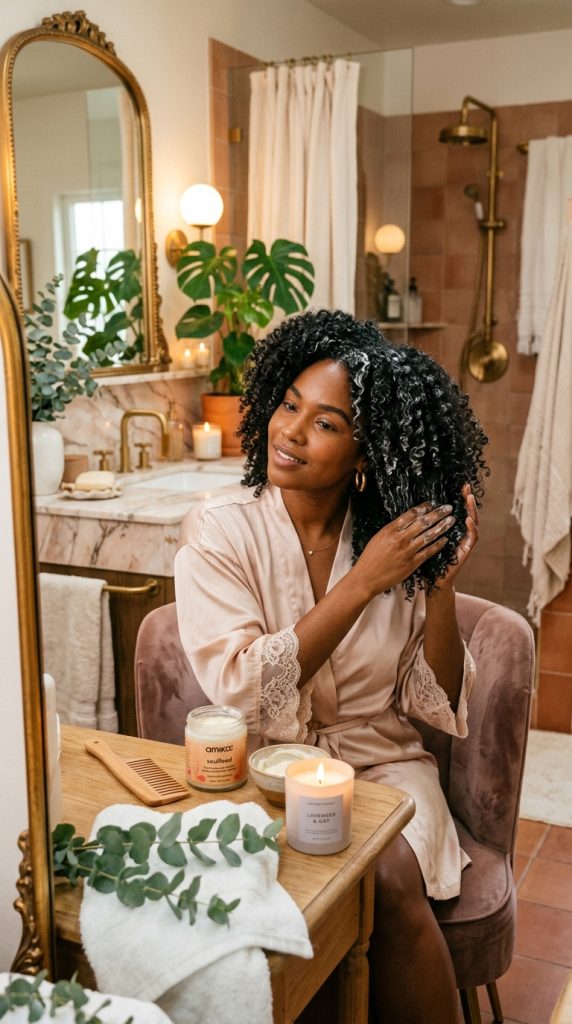
How To Deep Condition Curly Hair
Wash the hair gently using sulfate-free shampoo.
Apply deep conditioner generously from mid-lengths to ends.
Use fingers or a wide-tooth comb for distribution.
Leave the treatment on for 15–30 minutes.
Use a shower cap for extra heat retention if desired.
Rinse using cool or lukewarm water.
Style curls gently afterward.
Best For
- Dry damaged curls
- Frizzy textured hair
- Color-treated curls
- Thick curly hair
- Heat-damaged hair
- Long-term curl health
Pro Tip
Using gentle heat from a warm towel or shower cap can help deep conditioners penetrate more effectively.
Mistake To Avoid
Avoid overusing protein-heavy treatments if your hair already feels stiff or brittle. Too much protein can sometimes increase dryness instead of softness.
Another mistake is applying deep conditioner only to the surface without distributing it evenly through the curls.
4. Sleep On A Satin Pillowcase
One of the easiest but most effective curly hair frizz control tips is switching from a regular cotton pillowcase to a satin or silk pillowcase. It sounds like a small change, but it can make a surprisingly huge difference in how your curls look and feel every morning.
One reason cotton pillowcases create so much frizz is because cotton absorbs moisture and creates friction while you sleep. As your hair rubs against rough fabric overnight, the curl pattern gets disrupted, strands separate, and the cuticle becomes rougher.
This is why many people wake up with dry tangled curls even after styling their hair perfectly the night before.
Curly hair is already naturally prone to dryness, so losing even more moisture overnight can make frizz much worse over time.
Satin pillowcases work differently because the smoother surface allows the hair to glide more gently instead of rubbing aggressively against fabric. This helps curls maintain their shape while reducing dryness and friction.
This works best when combined with protective nighttime hairstyles like pineapple puffs, loose braids, or satin bonnets.
Another major advantage is moisture retention. Satin fabrics absorb far less moisture than cotton, which helps curls stay softer and more hydrated overnight.
This means your styling products often last longer, and your curls usually require less refreshing the next morning.
Another reason satin pillowcases became so popular in curly hair routines is because they help reduce tangles and breakage. Less friction means fewer knots, less pulling, and healthier ends over time.
The hair also tends to appear shinier because smoother cuticles reflect light more evenly.
This is especially helpful for color-treated, bleached, or heat-damaged curls that need extra protection.
Another huge benefit is easier morning styling. Many people notice they spend less time fixing frizz or redefining curls after switching to satin pillowcases regularly.
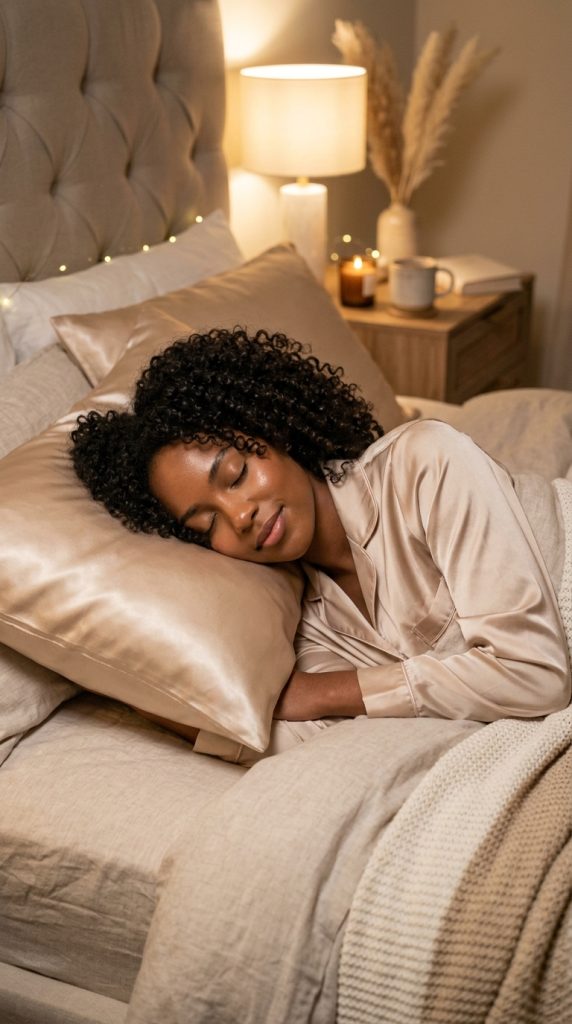
How To Use Satin Pillowcases Properly
Replace rough cotton pillowcases with satin or silk.
Wash satin fabrics regularly to avoid buildup.
Pair with loose nighttime protective hairstyles.
Avoid sleeping with soaking wet hair.
Refresh curls lightly in the morning if needed.
Best For
- Frizzy curly hair
- Dry curls and coils
- Color-treated hair
- Overnight curl protection
- Reducing tangles
- Softer healthier curls
Pro Tip
Champagne, black, or neutral satin pillowcases often stay smoother-looking longer and match most bedroom aesthetics beautifully.
Mistake To Avoid
Avoid very cheap rough satin alternatives that feel stiff or plastic-like because they may still create friction.
Another mistake is sleeping with loose heavily tangled curls, which can still create knots even with satin protection.
5. Stop Brushing Dry Curly Hair
One of the fastest ways to create excessive frizz in curly hair is brushing it while dry. This is one of the most common curly hair mistakes, especially for people transitioning from straight hair routines.
Curly hair naturally forms grouped curl clumps that create definition and shape. When dry curls are brushed aggressively, those clumps separate into individual strands, causing puffiness, volume imbalance, and frizz almost instantly.
This is why many people feel like their curls become “huge” or unmanageable after brushing.
The issue is not that curly hair is bad—it’s that curls react differently than straight hair.
Straight hair often becomes smoother when brushed because the strands naturally align together. Curly hair behaves differently because the bends and spirals separate when brushed dry.
This works best when detangling happens while the hair is wet or coated with conditioner.
Another major reason dry brushing creates frizz is because curly hair is usually more fragile when manipulated without moisture. Brushing through dry knots can increase breakage, split ends, and roughness over time.
Healthier curls generally need gentler handling.
Instead of brushing dry curls, many curl specialists recommend using fingers or wide-tooth combs during conditioning sessions. This helps preserve curl structure while reducing unnecessary stress on the strands.
Another reason avoiding dry brushing improves curls is because the hair maintains more shine and definition. Organized curl clumps reflect light better than separated frizzy strands.
This is especially important for fine curls, which can lose shape very quickly after brushing.
Another huge advantage is better curl longevity. Proper detangling techniques help curls stay defined longer between wash days.

How To Detangle Curly Hair Properly
Detangle during wash day or conditioning.
Apply conditioner generously first.
Use fingers or a wide-tooth comb gently.
Start detangling from the ends upward.
Separate knots slowly without pulling aggressively.
Avoid brushing curls once fully dry.
Best For
- Wavy, curly, and coily hair
- Reducing frizz instantly
- Preventing breakage
- Fine textured curls
- Preserving curl definition
- Healthier curl routines
Pro Tip
Finger detangling first before using a comb can reduce breakage significantly and help preserve curl patterns.
Mistake To Avoid
Avoid using fine-bristle brushes on dry curls unless intentionally creating volume for a specific hairstyle.
Another mistake is rushing through knots aggressively, which can weaken the curl structure over time.
6. Use A Diffuser Correctly
A diffuser can be one of the best tools for curly hair frizz control—but only when used properly. Many people accidentally create extra puffiness and dryness by diffusing incorrectly, even while using good products.
A diffuser works by spreading airflow more gently around the curls instead of blasting direct heat aggressively onto the hair. This helps preserve curl shape while reducing disruption during drying.
One reason diffusers are so popular for curly hair is because they create volume and faster drying without flattening the curl pattern completely.
Another major advantage is definition. Proper diffusing helps curls dry in their natural shape instead of stretching downward from water weight during air drying.
This can create fuller shinier curls with better structure.
This works best when the airflow remains low and gentle instead of extremely hot and powerful.
One of the biggest mistakes people make is touching the curls constantly while diffusing. Excessive movement disrupts curl clumps and creates frizz before the hair fully dries.
Instead, curls should remain relatively undisturbed during the drying process.
Another reason proper diffusing reduces frizz is because it minimizes long periods of wetness. Hair that stays damp for too long can become puffier and lose definition, especially in humid weather.
Diffusers also work beautifully for adding root lift. By gently lifting sections near the scalp, you can create soft volume without disturbing the curls too much.
Another huge advantage is flexibility. Diffusers can be used for soft loose waves, defined curls, or voluminous textured styles depending on technique and products.

How To Diffuse Curly Hair Properly
Apply styling products on wet hair first.
Set the diffuser to low heat and low speed.
Flip sections of hair gently into the diffuser bowl.
Hold still for several seconds before moving.
Avoid excessive touching while drying.
Diffuse until mostly dry, then air dry fully if desired.
Best For
- Faster curly hair drying
- Defining curls
- Root volume
- Wavy and curly textures
- Humid climates
- Frizz reduction routines
Pro Tip
Hover diffusing near the roots first before scrunching upward can help create volume while reducing frizz.
Mistake To Avoid
Avoid using high heat aggressively, which can dry the curls out and increase puffiness.
Another mistake is diffusing soaking wet hair without removing excess water first, which can make the process longer and increase frizz.
7. Seal Moisture With Lightweight Oils
One of the most effective ways to reduce curly hair frizz is learning how to seal moisture into the hair properly. Many people focus only on adding moisture through conditioners and leave-ins, but they forget that curly hair also needs help keeping that moisture inside the strands.
This is where lightweight oils become extremely helpful.
Curly hair loses hydration faster than straight hair because the bends and spirals make it harder for natural scalp oils to travel evenly through the lengths. As moisture escapes, the cuticle becomes rougher, which increases dryness, puffiness, and frizz.
Lightweight oils help create a protective barrier that locks hydration into the curls while adding softness and shine.
This works best when oils are applied after leave-in products instead of replacing moisture completely.
One reason lightweight oils work so well is because they smooth the cuticle gently without making the hair feel greasy or heavy. Healthy shiny curls usually come from balanced hydration—not from coating the hair with thick heavy products.
Another major advantage is frizz protection during humid weather. Oils help reduce how much excess moisture the hair absorbs from the air, which can prevent curls from expanding uncontrollably throughout the day.
This is especially helpful for people living in humid climates where curls tend to become puffy very quickly.
Another reason oils improve curl appearance is because they add softness and flexibility. Dry curls often look rough and undefined, while moisturized curls usually form smoother clumps with better movement.
Lightweight oils can also improve the appearance of damaged ends, making curls look healthier overall.
Popular lightweight options include argan oil, jojoba oil, grapeseed oil, and lightweight hair serums designed for textured hair.
Another huge advantage is versatility. Oils can be used during styling, overnight routines, refresh days, or after diffusing to soften crunchiness from gels.
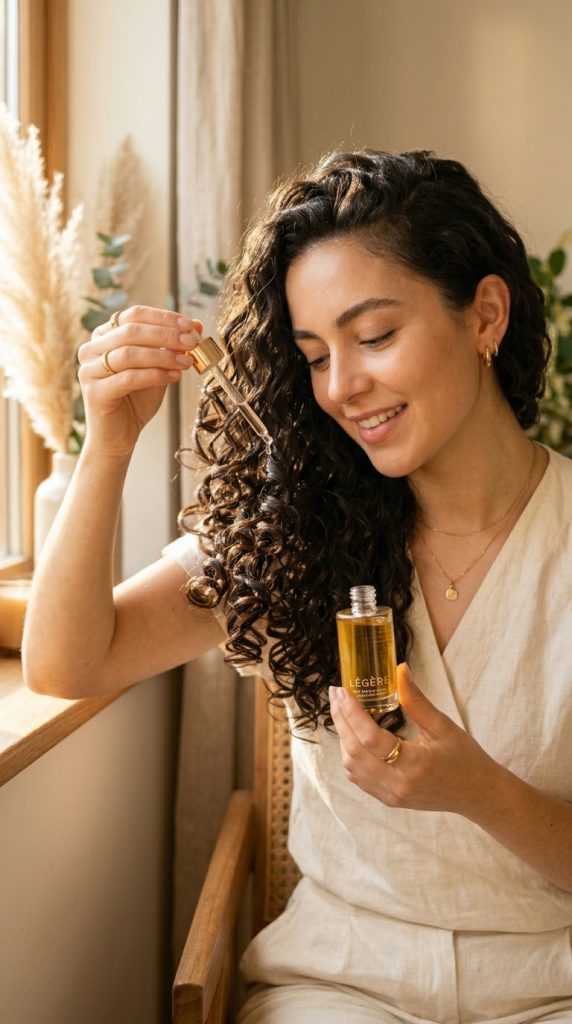
How To Use Lightweight Oils Properly
Wash and style curls normally.
Apply leave-in conditioner first.
Use only a few drops of lightweight oil.
Smooth gently over mid-lengths and ends.
Avoid overloading the roots.
Refresh dry areas lightly between wash days if needed.
Best For
- Dry frizzy curls
- Humid climates
- Damaged ends
- Thick textured hair
- Shine enhancement
- Moisture retention
Pro Tip
Warming the oil between your palms before application helps distribute it more evenly through the curls.
Mistake To Avoid
Avoid applying large amounts of heavy oil at once, which can weigh curls down and create greasy buildup.
Another mistake is using oil alone without moisture underneath, since oils seal hydration rather than replacing it.
8. Protect Your Hair From Humidity
Humidity is one of the biggest enemies of curl definition because curly hair naturally absorbs moisture from the air very easily. When extra moisture enters the hair shaft unevenly, the cuticle swells and lifts, causing puffiness, expansion, and frizz.
This is why curls often look completely different on humid days compared to dry weather.
The good news is that humidity frizz can be managed much better with the right techniques and products.
One reason humidity affects curly hair so strongly is because textured hair is naturally more porous. Porous hair absorbs outside moisture quickly, especially when the cuticle is already dry or damaged.
This works best when the hair is properly hydrated before styling instead of already dry and vulnerable.
Another major factor is product choice. Lightweight anti-humidity gels, creams, and styling products help create a protective layer around the curls, which reduces moisture absorption from the environment.
This helps curls stay smoother and more defined longer throughout the day.
Another reason humidity protection matters is because frizz prevention is often easier than frizz correction. Once curls become swollen and puffy, it’s harder to restore definition without rewetting or restyling.
Protective styling techniques can also help significantly during humid weather. Loose buns, braids, claw clips, and pineapple styles help reduce excessive expansion while still allowing curls to look soft and stylish.
Another huge advantage of humidity protection is improved curl longevity. Proper anti-humidity routines help curls maintain shape for multiple days instead of becoming frizzy within hours.

How To Protect Curls From Humidity
Use moisturizing leave-in conditioner first.
Apply anti-humidity gel or cream lightly.
Allow curls to dry fully before going outside.
Avoid touching curls excessively during the day.
Carry lightweight oil or serum for small touch-ups.
Use protective hairstyles during extremely humid weather.
Best For
- Humid climates
- Frizz-prone curls
- High-porosity hair
- Long-lasting curl definition
- Summer curl routines
- Soft controlled volume
Pro Tip
Completely drying the hair before stepping outside can help reduce humidity-related puffiness significantly.
Mistake To Avoid
Avoid overloading curls with too many heavy products, which can create buildup and attract more moisture from the air.
Another mistake is constantly touching or fluffing curls throughout the day, which increases frizz faster in humid weather.
9. Trim Damaged Ends Regularly
One of the most overlooked curly hair frizz control tips is regular trimming. Many people focus only on styling products while ignoring damaged ends, even though split ends and rough breakage can make curls look frizzier and less defined overall.
Damaged ends struggle to hold moisture properly because the hair cuticle becomes uneven and weakened. As a result, the curls often appear dry, tangled, rough, and undefined near the bottom.
This is why healthy trims can make curls instantly look softer and shinier—even without changing products.
One reason trims help so much is because damaged ends spread upward over time. Split ends rarely stay in one place. If left untreated for too long, the damage can continue traveling higher through the strand, increasing frizz and breakage overall.
This works best when trims become part of a consistent healthy hair routine instead of waiting until the hair feels severely damaged.
Another major advantage is improved curl shape. Curly hair usually responds beautifully to fresh healthy ends because the curls bounce more naturally and form better definition.
This is especially important for layered curly haircuts, where damaged pieces can disrupt the entire hairstyle shape.
Another reason trimming improves frizz control is because smoother healthier ends reflect light better. Healthy curls naturally appear shinier, softer, and more polished.
Many people are afraid to trim curly hair because they worry about losing length. But in reality, removing damaged ends often helps curls look longer and healthier overall because the hair breaks less over time.
Another huge advantage is easier styling. Fresh ends usually detangle faster, absorb products better, and maintain definition longer between wash days.

How To Maintain Healthy Curly Ends
Schedule trims every few months if needed.
Remove visibly split or rough ends.
Use sharp professional haircutting tools.
Combine trims with deep-conditioning routines.
Protect ends using oils and satin accessories.
Avoid excessive heat damage.
Best For
- Dry damaged curls
- Split ends
- Long curly hair
- Frizz reduction
- Healthier curl growth
- Better curl definition
Pro Tip
Dusting tiny damaged ends regularly can help maintain length while still improving curl health.
Mistake To Avoid
Avoid delaying trims for too long because severe split ends often create more breakage and frizz later.
Another mistake is using dull scissors at home, which can damage the ends further instead of creating clean healthy cuts.